11/19/2009

Best Bullet Butt Boy About

*New movie column, this time about the new not-really-a-hit Astro Boy movie (at least not in the U.S.), as related to a delightful little Osamu Tezuka tale from the late '60s in which the Mighty Atom beats the living shit out of United States forces in Vietnam. Urasawa should remake that one next. Enjoy!

Labels:

11/16/2009

Good things come to those who check the internet obsessively hundreds of times per day.

*That's how I came to win the Nobel Prize in Victory.

LAST WEEK'S REVIEWS:

pamphlets from last week (being Batman and Robin #6, PunisherMAX #1, Starstruck #3 and Hellboy: The Wild Hunt #8)

*Well, issue #300 of The Comics Journal was available online for a few hours (and maybe still is for subscribers?) - long enough for me to assess and affirm the quality of most of its 11 inter-generational conversations between cartoonists. I'd rank the Ho Che Anderson/Howard Chaykin piece as tops in sheer enjoyment, although all of them have their virtues; I mean, J.C. Menu in English. Come on.

But it's also worth mentioning that most of the Journal's regular columnists appear in this final magazine(ish)-format as well (plus a few reviews); of particular note is (will be) Matthias Wivel's piece on Moebius' The Airtight Garage and how its various incarnations (including 2008's new Le chasseur déprime) follow his development. Right now Moebius is in one of those odd positions European cartoonists often find themselves stuck in vis-à-vis North America where his renown is obvious but his work is somewhat inaccessible, to say nothing of recent work, which means a lot of English-language discussion of the work takes on a retrospective quality, and these retrospectives tend to imply the guy's hands were stolen by goblins sometime in the early 1990s, because hey: no recent work in English, save for that one Halo comic.

This piece covers a wider range, and I think offers a fuller view of one aspect of Moebius' body of work, which is valuable. And it also demonstrates the vitality remaining in the Journal's recurring, non-interview features.

*So then -

THIS WEEK IN COMICS:

Driven by Lemons: The new book from Joshua W. Cotter of Skyscrapers of the Midwest, which Sean T. Collins, in an interview with Cotter from the Comics Journal #299, referred to as making Skyscrapers look like Harry Potter in terms of accessibility, to which Cotter replied "I just have to do what my brain tells me to, you know?" The result here is a facsimile Moleskine sketchbook filled with seemingly random or abstract (and sometimes self-referential) drawings in a number of styles, which eventually fuse together loosely into an improvisatory philosophical wander. I went more in depth here, but let me state plainly that this is top-tier work for late in 2009. From AdHouse; $19.95 for 104 b&w and color pages. Preview.

Pictures That Tick: An unexpected Dark Horse reprint of a 2001 Allen Spiegel Fine Arts collection of Dave McKean's short comics from about a decade's stretch prior. I recall liking this stuff when it was new-ish, although I haven't gone back to it in four or five years. Literary and poetic shorts, touching on McKean's collage style and the inkwork of much of Cages; certainly those who enjoyed that longform work will want this, as McKean is not prolific in the comics form. It's a $19.95 softcover, 184 b&w and color pages.

The Fir-Tree: A 72-page hardcover Lilli Carré adaptation of the Hans Christian Andersen tale; I expect it'll look pretty. From HarperCollins' It Books imprint, priced at $14.99.

The Gift of the Magi: Also from It Books, a similarly conceived (96-page, $14.99) O. Henry adaptation by Joel Priddy, with the expected holiday theme. These things are 5" x 7" so I bet they'll fit in a stocking.

Casper the Friendly Ghost 60th Anniversary Hardcover: I like a birthday celebration comic for beloved kids' entertainment franchise that has its title character weeping tears of shame right on the front cover almost as much as I like ghost school report cards where all the grades spell out OOOO, so you can just imagine how the low low $9.95 cover price on this 7" x 10", 80-page color item is the frosty white icing on a cake of the hilarious youthful dead. Collecting 1949's Casper the Friendly Ghost #1 from publisher Archer St. John and what I presume is Harvey Comics Hits #61 from 1952, which was also effectively Casper #6, picking up from the St. John run, i.e. the first Harvey issue of Casper, although the official Harvey series didn't pick up until #7. Also, the "60th Anniversary" here deals with comics only; the Casper character actually dates back to the 1930s. When I come back from the dead as a ghost I'll scare everyone with comic book info, screaming issue numbers as they all run because I hate friends and these are tears of pride. Anyway: two Golden Age comics here. Preview.

Tarzan: The Jesse Marsh Years Vol. 4: But if you're more of a jungle pulp type, Dark Horse also has another 232 pages of Golden Age stuff just your speed. The usual $49.95; see?

Alex Raymond's Rip Kirby: The First Modern Detective Vol. 1 (of 5) 1946-1947: Shit, why the hell not? You've read about it in Dave Sim's glamourpuss, now experience Raymond's photo-realism style for yourself in his final major newspaper strip, a sleek and modern detective thing written by King Features editor Ward Greene, at least for this book, another huge Library of American Comics hardcover from IDW, where they never sleep. Your $49.99 gets you 320 pages, including educational materials from Raymond biographer Tom Roberts and expert Brian Walker.

Pluto Vol. 6 (of 8): Meanwhile, in manga - Tezuka by way of Urasawa, again. The usual $12.99.

Black Jack Vol. 8 (of 17): Or maybe Tezuka by way of Tezuka, for another 328 pages. It really is something that 2000+ pages of Black Jack is out in English now, huh? And Vertical isn't quite halfway done. And even that won't cover the stuff Tezuka didn't want to reprint! Crazy.

Oishinbo Vol. 6: The Joy of Rice: There's also a million or so pages of this quintessential cooking manga, although it looks like VIZ's translation may be halting soon - only one more volume after this one (on casual venue 'izakaya' foods) is set, due in January 2010.

Vagabond Vol. 30: On the other hand, the publisher is primed to see Takehiko Inoue's swordsman drama through (it's currently up to vol. 31 in Japan), as it enters its final year or two.

Borgia Vol. 3: Flames from Hell: And then there's popular Eurocomics. You've probably heard that Milo Manara is finally wrapping up work on X-Men: Ragazze in fuga (roughly, X-Men: Girls in Flight), a Chris Claremont-written 'women of the X-Men' original Italian comic album first announced in March of 2006 - some b&w preview pages are now out and about. But Manara hasn't just been drawing superheroes the whole time; indeed, Heavy Metal readers have been treated over the last few years to this historical fiction exploitation-movie-on-paper series scripted by no less than Alejandro Jodorowsky, a man who knows his family issues and can no doubt appreciate the reign of the dirtiest Pope of all. This is HM's oversized $14.95 unedited hardcover album version of the newest stuff, which was supposed to conclude the story at one point, though it looks like a fourth chapter is forthcoming, maybe around the time that X-Men comic drops in English.

Viking #4: Ivan Brandon & Nic Klein, oversized Image at $2.99 for 24 pages of no nonsense. Preview.

Fall Out Toy Works #2 (of 5): Hard to believe The Winter Men is finally due in collected form next week. Here's the current project by its writer, Brett Lewis, a normal-sized Image at $3.99, all anime-slick and 32 pages.

Hellblazer #261: Your Peter Milligan of the week, seeing regular series artists Giuseppe Camuncoli & Stefano Landini return for a three-parter.

Dominic Fortune #4 (of 4): Concluding Howard Chaykin's trip back in time (in several ways).

The 'Nam Vol. 1: And then there's another odd bit of Marvel time-travel, a gritty bit of 1986 in the form of a period war comic, cooked up by two veterans of the day, editor Larry Hama and writer Doug Murray. Following soldier Edward Marks as he arrives on the scene in 1966, the idea was that each issue would jump forward a month with each issue's realtime release (albeit realtime decades removed). However, it's probably influential penciller Michael Golden that left the most lasting impression on readers, and this new $29.99 softcover collection notably stops at issue #10, just a few issues before Golden's departure from the series; Murray remained as regular writer until 1990, and the series continued to 1993, by which point the Punisher had been introduced as a sales-boosting member of the cast. Still, these 248 pages can perhaps be read as particular to their time, when the very plates of the superhero publishing earth seemed to shift.

Labels:

11/09/2009

I feel better.

*Been sick all weekend, including one night of trying not to move under the blankets so the winter wraiths couldn't get into my pores. That is a medical condition and those are terms of art.

THIS WEEK IN COMICS:

Pim & Francie: The Golden Bear Days: Being the first-ever bookshelf ready comics-related item by Al Columbia, a blinking presence on the comics scene for years now. Chris Mautner has some background on the guy's work, although this new 240-page hardcover project is (appropriately) different from anything else he's done. It's an arrangement of drawings -- sometimes preparations for drawings -- generally honed in on the journey of two old-timey animation-looking kids. Sometimes there's dialogue, sometimes there's 'scenes,' but most of the work's interest comes from wrenching you though time and space as the narrative stretches just thin enough to part in spots, only to gum together again for a little while, until it's pulled again. Not an easy work in the slightest; some will dismiss it as just a hodgepodge of frustrated impulses. And some have already declared that part of the appeal. Have a look. From Fantagraphics; $28.99.

Hot Potatoe: Elsewhere in collected images, Drawn and Quarterly brings 276 pages of work from Marc Bell, the elusive talent behind the excellent 2003 Highwater Books production Shrimpy and Paul and Friends and Fantagraphics' 2004 pamphlet Worn Tuff Elbow #1. Since then, Bell's ultra-tactile '60s underground stylings -- already so layered and intense to seem more like the memory of an sunny-soaked acid funnybook -- have mostly leaked out into illustration and sculpture and found stuff made his. The best of it (and it before it), 2001-08, including anthology comics never before collected, is featured here as a $39.95 color hardcover.

Luna Park: Meanwhile, Vertigo continues its line of original hardcovers with a 160-page color tale of Coney Island, a Russian gangster and relevant events of 100 years ago, from journalist and historical fiction novelist Kevin Baker. Art by Danijel Zezelj & Dave Stewart, which locks this in as probably the most interesting project I've seen from the line in a while. Tiny lil' preview here. It's $24.99.

Beast: A 152-page solo work from Marian Churchland, whose lithe, manga-informed art got some attention in a few recent issues of Elephantmen. This one's about a sculptor who's tasked with carving the likeness of an uncanny client. Preview. From Image, $15.99.

The Year of Loving Dangerously: A 128-page collaborative work from writer Ted Rall and artist Pablo G. Callejo, chock-full of all-real 1980s suicidal turmoil and economic desperation as in fucking-to-keep-a-roof-over-your-head, as lived by the writer. Just look. From NBM, $18.95.

Insomnia Café: I'm aware that Turkish-born cartoonist M.K. Perker has a body of solo comics work behind his Vertigo collaborations with writer G. Willow Wilson (Cairo, Air), but I don't think any of it's available in English. So, I'm not sure what to expect from this all-new project from Dark Horse, an 80-page b&w hardcover telling the allegorical story of a troubled rare books expert granted access to an Archive full of volumes still being written. Perker's art seems a good deal more lively and caricature-prone here than in his Vertigo stuff, and it could be worth checking out how his storytelling operates. It's $14.95.

Sky Doll: Doll Factory #1 (of 2): This, on the other hand, is a translation of a foreign work, specifically a pamphlet-format miniseries version of a 96-page art book from 2003 concerning the ongoing Sky Doll religious-satire/Disney-anime fusion series from Alessandro Barbucci & Barbara Canepa, the three extant volumes of which Heavy Metal published as an all-in-one magazine in 2006 and Marvel re-published (with a new translation) as its own pamphlet miniseries in 2008. Why a process-heavy 'making of' album is getting transformed into a pair of $5.99 comic books is beyond me, although there's a short bonus story included, and this does mark the first entirely new material to see English release since the Heavy Metal publication, so...

The Authority: The Lost Year Reader: Oh, here's a $2.99 reprint of Grant Morrison's & Gene Ha's abortive revival of The Authority from 2006. Or, one issue came out in 2006 and then another one arrived in 2007, and that was pretty much that, although it did get one more issue out there than Morrison's contemporaneous WildC.A.T.s project with Jim Lee (supposedly to see completion as an original graphic novel one of these days) - this all went down while Morrison was on the writing staff of 52, you'll recall. Now it's years later, a totally different Authority series has over a dozen issues out, and Wildstorm has retained fellow 52 veteran Keith Giffen to script out 10 new issues from Morrison's plotting so as to fill in the gaps between series; the effort begins next week (with issue #3), with artists Darick Robertson & Trevor Scott, although Jonathan Wayshak is listed as artist for issue #4.

There's some irony in seeing two different art teams pegged for the first two issues, actually - out of all of Morrison's superhero projects from 2006 or so, The Authority was maybe the farthest he ventured outside of his comfort zone, and part of that was from how artist Gene Ha (cover artist on the 10 new issues) seemed so in synch with Morrison's concept for the revival, a none-too-original planting of the Authority cast in the 'real' non-superhero world. It was all in the execution, how Morrison struggled to give his human characters unaffected, dispassionate dialogue, while Ha spent nearly all of issue #1 keeping everyone's face somehow obscured from view, bodies slumped and lumpy, and then humbled more by the literal vastness of the Authority and their technology, a witty variant on the bigger! bolder! Widescreen stylings that made the stuff popular under Ellis & Hitch. For a writer often accused of paying little mind to visual qualities, it seemed like an interesting use of a franchise revival for aesthetic adventuring.

But it was also a thing of potential, of word-picture linkages that needed space to play out. Just from the solicitations it looks like the mission is different now, with the writer acting as plotter to another writer and artists coming in to draw the storylines. So: it's more like 52. Ah, just more like a superhero comic, a continuity comic, although it'd be great if Giffen's mean streak would show; maybe that's the best to hope for now.

Batman and Robin #6: And here's your new Morrison, ending the Red Hood storyline and the much-remarked-upon tenure of penciller Philip Tan. Sneak peek. Note that series is taking a break until the end of January so that its upcoming Blackest Night tie-in story (drawn by Cameron Stewart) won't get ahead of the Event itself.

PunisherMax #1: You might complain about these $3.99 price tags, but times are so tight at Marvel they can't even afford title spacing. God, what the fuck kind of joke is that? I don't have the fucking money for that. Is Diablo Cody sitting on my couch? Do I have a band? What the hell have you done to me, Frank Castle? That's million-dollar talk show humor. Jason Aaron & Steve Dillon re-launch the Punisher. I blame them.

Tank Girl: Skidmarks #1 (of 4): No, this isn't an IDW series, although writer/co-creator Alan Martin and artist Rufus Dayglo are involved; it's a pamphlet miniseries from Titan Publishing, reprinting a serial from the Judge Dredd Megazine, newly colorized. Samples here.

Phonogram 2: The Singles Club #5 (of 7): Kieron Gillen & Jamie McKelvie return to that one club, and those songs, and the people. Backup drawn by Dan Boultwood. Gillen also has a Marvel debut this week, S.W.O.R.D. #1 with penciller Steven Sanders.

SuperGod #1 (of 5): Another superhero take from writer Warren Ellis and publisher Avatar, drawn by one Garrie Gastonny. The topic is superhumans as divine, as far as it relates to humans. Preview here. Ellis & Avatar also have Gravel #15 this week.

Chronicles of Wormwood: The Last Battle #2 (of 6): Also Avatar, also divine; Garth Ennis & Oscar Jiminez.

Citizen Rex #5 (of 6): Hernandez, Gilbert & Mario. Here.

B.P.R.D.: 1947 #5 (of 5): Ending the current Mike Mignola/Joshua Dysart/Fábio Moon/Gabriel Bá miniseries. Like so. Co-writer John Arcudi and artist Guy Davis return in January for the next present day storyline, King of Fear.

Hellboy: The Wild Hunt #8 (of 8): Ending the current Mike Mignola/Duncan Fegredo miniseries, although you probably don't want to count on much of an ending-ending; the Mignolaverse letters page is the glue that binds all the many Hellboy series, frequently addressing totally different stories and artists than whoever's in a given comic at a time, and recently (in the Abe Sapien: The Haunted Boy one-off) it's been referring to The Wild Hunt as guilty of "the sin of setup," perhaps better taken as the first 1/3 or so of an especially long story than as a self-contained unit (even by Hellboy standards, I guess), which will continue at some point in 2010, certainly after the next Mignola project with Richard Corben, the one-issue Hellboy: The Bride of Hell, due in a month and a half. Still, I'm sure some added origin-related info will appear to mark the border between storylines. Preview.

Frank Frazetta's Dark Kingdom #2: I am required by law to disclose all Tim Vigil comics, including this $3.99 item from Image, although the art actually serves as illustration to a prose story by Mark Kidwell. I am a man of liberal construction.

Batman/Doc Savage Special: Sure, sure, it may be a $4.99, 56-page introduction to yet another DC universe-among-universes, complete with a big miniseries yet to come, but writer/mastermind Brian Azzarello seems to have a pretty great concept brewing: a matured, shared universe of pulp magazine fixtures, upset by the arrival of the gun-toting early Batman cast as the young hotshot in town, thus neatly linking the early notion of the superhero to the costumed magazine characters that certainly provided some of the concept's lineage. So yeah: Doc Savage and Batman-with-a-gun, drawn by Phil Noto. I think the Spirit's gonna show up too? Later?

Labels:

11/02/2009

An anticipation post that goes near and far.

*Ladies and gentlemen, Brendan McCarthy on Spider-Man and Dr. Strange. April, May, June: 2010.

LAST WEEK'S REVIEWS:

Detective Comics #858 (focusing on J.H. Williams III - where he's been, what he's doing, and where he's going with what he's done; thanks for the kind words on this one, everyone!)

*Closer -

THIS WEEK IN COMICS!

Monsters
: A new Secret Acres collection of Ken Dahl's frank, vivid, and energetically cartooned account of herpes - its composition, its spread and its effects on a man, and other people. I've read some of this in minicomics form, and I was impressed by its visual ingenuity and strong sense of humor. Very much worth checking out; it's $18.00 for 208 pages, 7" x 7". Chris Mautner reviews it here.

Buenaventura Press Comics Revival 3-Pak: In which the well-known art comics publisher looks to the past for a means of keeping pamphlet-format alternative comics viable in the Direct Market - the old fashioned 3-in-1 plastic bag bundle, like you used to see in the supermarket. Except every one of these $11.95 packs features the same three comics: (1) Lisa Hanawalt's I Want You #1; (2) Ted May's Injury Comics #3; and (3) Eric Haven's The Aviatrix #1. All three are essentially humor comics in some way, whether it's (1) alternative weekly-type cute-absurd grotesqueries, (2) high school autobio and fantasy hero pastiche or (3) po-faced adventure stuff crashing into wild-eyed faux-autobio vignettes. I reviewed them in here.

Like a Dog: A new hardcover collection of rare and scattered work by cartoonist and musician Zak Sally -- best known in comics for his Ignatz series Sammy the Mouse, two issues extant -- culled from 15 years of work. Featuring the first two (of three) issues of Sally's one-man anthology series Recidivist, plus various and sundry short pieces, with annotations, bonuses and an introduction by John Porcellino. From Fantagraphics; $22.99 for 134 b&w and color pages. Preview here.

Usagi Yojimbo: Yokai: Think of it as a really special, really deluxe one-off issue if you want, but I wonder if this isn't Dark Horse's bid to break Stan Sakai's long-lived funny animal swordsman series into some bookstore hearts. A 6" x 9", $14.95 hardcover, 64 pages, all-new in painted color, wherein Usagi struggles to rescue a kidnapped man from a thoroughly haunted castle. Have a look.

Lobo: Highway to Hell #1 (of 2): Sometimes I feel like Sam Kieth is single-handedly keeping the old DC Prestige Format afloat; then I wonder if the creator of The Maxx and Zero Girl (and errant co-creator of The Sandman) is the only artist I'll follow onto these things. Anyhow, here's our latest chance to catch up, in a new Lobo vs. Satan story written by Scott Ian, the bedrock of music outfit Anthrax. Your $6.99 gets you 64 color pages, which I'm actually only presuming are in the Prestige Format, given the price point. Let's hope? Preview.

The James Bond Omnibus Vol. 001: Vintage reprints, as expected. Some year not far away there might be weeks without huge stacks of material pulled from all over the history of world comics, but, for now, Titan Books brings a 304-page compilation of the earliest, most famous comic strip adaptations of Ian Fleming's novels, 11 serials that ran from 1958 to 1962 in the Daily Express, drawn by John McLusky with script adaptation by Henry Gammidge, Anthony Hearne and, in the case of Dr. No, Peter O'Donnell, later co-creator of Modesty Blaise. In glorious b&w; it'll run you only $14.95 in the U.S.

Criminal Deluxe Edition Vol. 1: But if it's more recent guns 'n money (in omnibus form) you lust for, now you can plunk down $49.99 for a 432-page collection of the first three storylines (Vol. 1 #1-10, Vol. 2 #1-3) of Ed Brubaker's & Sean Phillips' intergenerational crime saga, which reads a hell of a lot better in big chunks anyway. Includes an introduction by Dave Gibbons, a bonus story (from Liberty Comics #1, I think), the series' initial comics-format online 'trailer,' bonus production art and more.

NANA Vol. 19: And then there's always the latest from this prime shōjo series, whose readers will appreciate its drawing closer to where it's up to in Japan (vol. 21), currently still frozen, I think, since artist Ai Yazawa took ill in June.

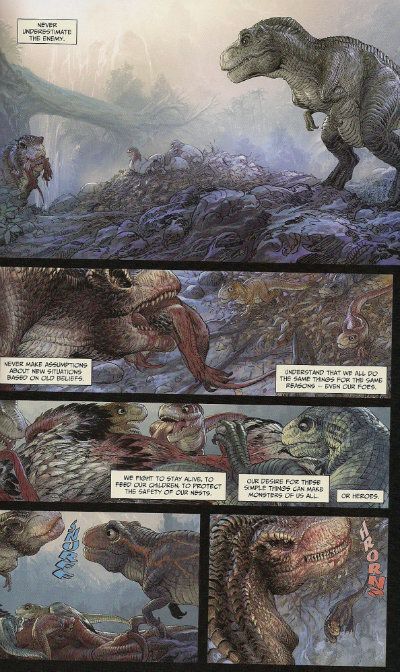
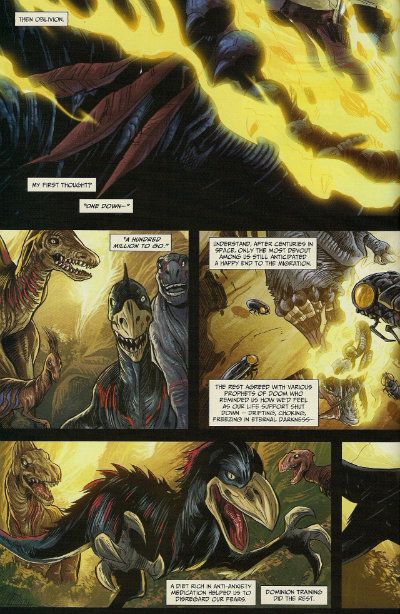
Age of Reptiles: The Journey #1 (of 4): Man, I didn't expect to see this series again. Not a value judgment, just... you never really know when veteran storyboardist and production artist Ricardo Delgado will pop up with more wordless Dark Horse comics about dinosaurs and other prehistoric beasts romping around. This new entry follows the 1993-94 Age of Reptiles (later subtitled Tribal Warfare) and 1996's Age of Reptiles: The Hunt, and sees lots of creatures herding together to migrate south, only to encounter a feisty Tyrannosaurus rex. They don't make 'em like this anymore. In color, $3.50; preview.

Starstruck #3 (of 13): And on that note, more from IDW, presenting the Elaine Lee/Michael Wm. Kaluta classic in new color.

From the Ashes #6 (of 6): Also, IDW wraps up Bob Fingerman's post-apocalypse slice-of-life this week.

The Zombies That Ate the World #6 (of 8): Devil's Due and Humanoids with more Guy Davis, in case you're in withdrawal. Related -

Witchfinder: In the Service of Angels #5 (of 5): Your Mike Mignola of the week, with artist Ben Stenbeck, now linking up to current stories in B.P.R.D., despite taking place in Victorian times. Like so.

Greek Street #5: Your Peter Milligan of the week, bringing the first softcover's worth of this ancient-myths-as-crime-drama series to a close. See some here. Note that Vertigo also has the actual first softcover for Milligan's Hellblazer run out this week, Scab, collecting his first storyline with regular artists Giuseppe Camuncoli & Stefano Landini (#251-253), a subsequent story with guest artists Goran Sudzuka & Rodney Ramos (#254-255) and a bonus short from issue #250 drawn by Eddie Campbell, all for $14.99.

Herogasm #6 (of 6): Closing out a fairly typical stretch of issues for The Boys, which just seemed ready to go a little early. Have a peek, but don't settle in...

The Boys #36: That's right, a double-shot of Garth Ennis climax power, as the subsiding orgy of Herogasm gives way to this final set of revelations regarding team member Mother's Milk. Yep. The French guy and the dangerous lady have their secret origins up next.

Starr the Slayer #3 (of 4): This is kind of a lot of pamphlets this week, huh? These things add up too. But the stylings of Richard Corben, they are hard to resist. Daniel Way scripts.

Black Widow: Deadly Origin #1 (of 4): On the other hand, I'm not sure about $3.99 for a movie-primed Natalia Romanova background tour, although the usually-good Paul Cornell is writing and the always-good John Paul Leon is on board for flashback sequences. Primary drawing by Tom Raney, as you can see.

Strange Tales #3 (of 3): And then, the Marvel 'indie' experiment reaches its end. Peter Bagge closes up his Hulk story, and nods are made by Max Cannon, Nicholas Gurewitch, Chris Chua, Becky Cloonan, Paul Hornschemeier, Jay Stephens, Corey Lewis, Stan Sakai (as mentioned above), Jonathan Jay Lee and Warren Simons. Cloonan preview here; Lewis preview here.

Age of Bronze #29: And then there's the long haul. The 'part 10 in a continuing story.' The Special Music Issue in which "Achilles headlines with a song about cosmic sex as Cressida has her heart ripped out. The gods don’t seem to pay much attention to King Priam of Troy, but he drones on and on anyway. And when the songs are over, the battles and intrigue keep going." I suspect battles and intrigue sums up the process of maintaining a creator-owned comic book for 11 years. So here's to you, Eric Shanower -- also starting a second Skottie Young-illustrated Marvel Oz series this week, The Marvelous Land of Oz -- and your massive comics account of the Trojan War. See it here, 24 pages, $3.50. Luck to you as always.

Labels:

10/26/2009

Consumer updates of all sorts.

*So, is DMP's release of Tezuka's Swallowing the Earth already out of print? I notice Amazon has already reverted its listing to used/new sellers, and other sites seem to have it on perpetual backorder. Are copies scarce? Distribution problems? Does Diamond still have it? Copies should be available through that title link above, at least, but I dunno how big the print run was; might want to start checking up now, if your interest is scratching.

LAST WEEK'S REVIEWS:

Up in Flames (yes, there was a Mr. Natural/Fabulous Furry Freak Bros. porno in the '70s, at a crucial time for underground comics and dirty movies alike)

Flipped! Halloween Special (just a few words on horror manga in a roundtable on the topic)

*In other dawn of modern manga news, I've really been enjoying Abrams' The Art of Osamu Tezuka: God of Manga; lots and lots of images from all sorts of early and untranslated works, and Helen McCarthy's text, while introductory by its own admission, is doing a good job of laying out the context succinctly so far.

But I've gotta say, the best part right now is definitely the included dvd. I haven't heard much about it online -- and I kinda get the impression Abrams is attempting to keep the details hazy -- but it's not brand-new content. It's better: a newly subtitled 1985-or-thereabouts NHK documentary on Tezuka, made with his full participation, following him around for a few weeks of his life as a God of Manga long ago established.

A working God too, living out of a gritty one-man apartment/workspace five days a week -- the documentary crew installs remote cameras and mirrors(!!) so we can watch Tezuka draw, glance at the tv, scratch himself, nod off at the drawing board -- commanding his art assistants by day (one of them admits to having slept on a studio couch for about a week straight), and occasionally running through the streets of '80s Tokyo to catch his ride to the airport where a plane to France awaits, cranking out pencilled pages on the drive down and securing a fax number for the pages he's gonna be drawing on the flight. Later he wins an animation award at a festival in Hiroshima, and slips back to his hotel room for more work in between popping in at the reception.

Not much on the life 'n times presented; but then, you just bought a book for that, right? No, the dvd is where you get to hang around with Tezuka, who jokes that you'd have to be an idiot to draw comics for a living, answers a question upside-down in a handstand and vows to figure out how to get his old hands to draw a good circle again, so he'll be ready to go for the next 40 years of his career. He'd be dead in less than half a decade. I can't imagine some glossy contemporary supplement serving him better.

THIS WEEK IN COMICS!

Red Snow: And look at this - the latest in Drawn and Quarterly's attempts at bringing classic gekiga to the English language, or at least works by classic gekiga artists. This is a 2005 collection of short stories by the late Susumu Katsumata (1943-2007), who was active in comics since shortly after the entry of the venerable alternative magazine Garo onto the mid-'60s scene. I understand these are emotion-saturated pieces, set in a rural mid-century Japan touched by mythic fantasy. I'd peer through this before anything else on Wednesday. A 232-page hardcover, $24.95.

Map of My Heart: But if you're in more of a retrospective mood, D&Q also has a new collection for artist John Porcellino and his King-Cat Comics and Stories (est. 1989), which recently saw the release of issue #70. More than 75 stories, musings and slices of life culled from issues #51-61 of King-Cat (1996-2002) are included in these 304 pages, tracking several major shifts in the artist's life as rendered in his assured yet contemplative style. Here's a sample; it's (also) $24.95.

The Fat Freddy's Cat Omnibus: What, the porn review wasn't enough? You want the real stuff? These vintage high-slapstick underground capers are probably the opposite of contemplative, although the cat always was a bit smarter than Fat Freddy himself. It's a 368-page Knockabout Comics presentation, so I'm presuming all the extended The Adventures of Fat Freddy's Cat material is in here -- parodic social comedy, genre spoofs, hippie exchanges, stretching from the '60s into the '90s -- along with the one-pagers and stuff. The U.S. price is $29.99.

Key Moments from the History of Comics: And now a beginning - 48 pages of gag comics by François Ayroles, set in the world of the funnies, culled from two French books of the type (2005, 2008), and published in English by Beguiling Books, the publishing arm of North American ultra-retailer The Beguiling. I believe this was initially released in conjunction with the 2009 Toronto Comic Art Festival, to which Ayroles was invited as a guest of honor. More here; it's $10.00.

Rockpool Files: Ah, sneaking up on me! A new book from writer Glenn Dakin, British alternative comics mainstay; you might recall the Top Shelf collection Abe: Wrong for All the Right Reasons. This is a new collection of strips drawn by Phil Elliott (the two previously teamed on the 2005 pamphlet Mr. Night), concerning a crab who is also a detective. From SLG Publishing; 64 pages for $6.95.

Tank Girl Remastered Vol. 4: The Odyssey: Meanwhile, more vintage British funnies surface, these being a 1995 Vertigo commission teaming artist/co-creator Jamie Hewlett with writer Peter Milligan for a monstrous and Joycean plunge into fame and doom. Features new reflections from the writer, and some other stuff From Titan Books; $14.95 for 112 color pages.

The Eternal Conflicts of the Cosmic Warrior: A 32-page, $3.50 one-off by Paul Grist, spinning out from the soon-to-relaunch Jack Staff, and leading into its own series of miniseries for a fighter that tends to show up just when a final effort is needed. Samples.

Groo: The Hogs of Horder #1 (of 4): That's right, the title's implication is quite clear; it's the Groo version of America's Financial Crisis. From Mark Evanier & Sergio Aragonés, the latter of whom is also starting up his work on Bart Simpson Comics this week with issue #50. Groo preview here.

Abe Sapien: The Haunted Boy: More Mignola & Arcudi, out of nowhere!! This is a 40-page comic featuring Abe Sapien, as drawn by one Patric Reynolds, of the back-up story in Hellboy: The Wild Hunt #7 the other week. Preview.

Dark Reign: The List - Punisher: John Romita, Jr. drawing the Punisher gets a mention, simple as that.

Detective Comics #858: Starting the next storyline in the Greg Rucka/ J.H. Williams III run.

Ignition City #5 (of 5): Ending this grounded space pilot series from writer Warren Ellis.

1,000 Comic Books You Must Read: Canon fodder, plain and simple. A 272-page charge. But this one comes from a single source, Marvel/DC writer Tony Isabella, and I suspect will carry some good personality in its tour of not-optional history. From Krause Publications, a $29.99 hardcover.

Labels:

The now-expected Monday sub-post.

*It's Halloween, almost, and David Welsh invited me to participate in a special edition of his Flipped! column over at the Comics Reporter. The topic is horror manga, so I (briefly) cover works by three ghosts of Japanese comics: (1) Junji Ito, the once-top banana among Kazuo Umezu devotees who's since vanished from the North American scene; (2) Ultra-Gash Inferno auteur Suehiro Maruo, soon to re-materialize in English via The Strange Tale of Panorama Island, coming next year from Last Gasp; and (3) the notorious Jun Hayami, whose Creation Books-curated ero-guro collection Beauty Labyrinth of Razors wound up as the Great Pumpkin of manga in English when UK printers deemed it too hot to handle and the publisher briefly released it as an e-book before sending it away to live with the Great Old Ones.

Many others contribute, so enjoy!

10/21/2009

Robert Crumb adapted the Bible to comics so I turned in a column on porno.

*Specifically, the 1973 porn feature Up in Flames, an unauthorized hardcore usage of Mr. Natural and Gilbert Shelton's the Fabulous Furry Freak Brothers -- also the subject of an authorized, fully storyboarded stop-motion animated feature, Grass Roots, currently seeking production funds -- preserved for the ages on DVD-R by Something Weird Video (NOT WORK SAFE PLEASE DO NOT INCLUDE IN YOUR POWERPOINT PRESENTATIONS OR CRAFT SESSIONS WITH YOUR STUDENTS). It may not cover All 50 Chapters of Genesis, but it does prominently feature the line "like a little snatch, Mr. Natch?" Also: general thoughts on smut; happenings of the year 1973; Blind Arthur Blake. Enjoy.

Labels:

10/19/2009

Stuff Coming Up

*Robert Crumb column in two or three days; already written, just needs posting. The second half of that Manga thing that's been gathering dust for close to a month now; too polemical and unfair in my first go, re-thinking. International comics fun. Minicomics. Maybe my daylight time will get less hectic.

THIS WEEK IN COMICS!

The Story of O: You know what always comes first on this site? Straight-up smut by Guido Crepax. Slip on your owl mask and join NBM for this new 176-page, all-in-one, $24.95 hardcover edition of Crepax's 1975 adaptation of Pauline Réage's classic novel of submission, composed for a lover who claimed that a woman could not write effectively in the manner of de Sade. The influential Crepax -- an avowed inspiration for younger European cartoonists like David B. -- adds his consummate design style and a deft command of the page, conveying voyeurism through large panels flanked by smaller glimpses of eyes and people, and emphasizing bondage via contracting bodily details, as seen here. Those eager for more might want to track down Taschen's two Crepax hardcovers from 2000 (Justine and the Story of O and Emmanuelle, Bianca and Venus in Furs), which puts together 1000 or so pages of this stuff between them, although I can't speak for the quality.

What a Wonderful World! Vols. 1-2 (of 2): Inio Asano is one of the more interesting young artists working in manga today -- I mean, as far as someone who doesn't live in Japan and can't read Japanese can tell -- having already built up a varied and striking catalog before the age of 30. However, he's probably best known in North America at the moment for his least interesting work, the 2005-06 twentysomethings-in-flux navel-gazer solanin (released by VIZ in 2008), which I totally admit to being in the minority on, given the Eisner and Harvey nominations and near-unanimous critical acclaim and all that. Nonetheless! I still think it's an uneasy, mechanical drama contraption, sweating like realism while doling out neat, tiny epiphanies and pivoting on a riotous moment of high melodrama; I'd recommend Hiroaki Samura's Ohikkoshi, published by Dark Horse in 2006, as a similar type of manga that's more interesting and accomplished, I think, on every conceivable level.

None of that's to say it was awful or anything, but I think this earlier (2003-04) suite of odd, brooding snatches of urban living plays better to the artist's strengths in slicing out ominous images from calm settings and setting them against supple, expressive cartooning to capture tricky moods and subtle unease, although there's certainly no lack of aimless young things eager to tell us of their internal tumult either. Worth a look though. Note that VIZ is releasing both volumes on the same day, 210 pages each, priced at $12.99 a pop.

RIN-NE Vol. 1: Being VIZ's first hardcopy collection of longstanding manga hit machine Rumiko Takahashi's new project, serialized online in English at the same as each chapter's Japanese publication. It's about a girl who wants to stop seeing spirits and her classmate, a half-boy half-shinigami. Only $9.99.

Vagabond VIZBIG Edition Vol. 5: That's vols. 13-15 of Takehiko Inoue's swordsman opus, all together in one 624-page, $19.99 softcover doorstop. Inoue has estimated a 2010 or 2011 conclusion for the series, currently up to vol. 31 in Japan (and vol. 29 in VIZ's single releases), so expect there to be 11 or so of these tomes in total. Inoue also has a new volume of his (other) basketball series out this week, Real Vol. 6.

Naoki Urasawa's 20th Century Boys Vol. 5 (of 24): It'd be nice if this winds up going monthly after Pluto ends in three volumes, although I think Monster ran bi-monthly without any competition from the same artist.

Comic Diorama: A neat-looking Top Shelf pamphlet by artist Grant Reynolds, promising five stories of weird, mythical and exploratory themes in 48 pages. It's $5.00; preview.

Noir: A Collection of Crime Comics: A new Dark Horse effort, bringing together some well-known talents for new b&w crime stories, or at least stories featuring said talents' familiar characters that fit into a noir theme, like Dean Motter's Mister X or Paul Grist's Kane. Also included are a new Criminal story from Ed Brubaker & Sean Phillips, plus work from Brian Azzarello, Rick Geary, David Lapham, Jeff Lemire and more. It's a 120-page softcover, priced at $12.95. Have a look.

Dread & Superficiality: Woody Allen as Comic Strip: It's true, readers - some days I doubt the 100-year reign of our Golden Age of Reprints. But all it takes to restore my faith is a $35.00 hardcover devoted to the 'best of' artist Stuart Hample's 1976-84 Inside Woody Allen newspaper strip. So yeah: daily gags with Woody Allen instead of Hägar the Horrible, which, debuting the year before Annie Hall, essentially preserved the persona dominant in Allen's early, funny works on the comics page, as if to (unintentionally) parody a comic strip gag character remaining the same forever, said gags sometimes supplied by Allen's own joke writers. Published by Abrams, 240 pages in 11" x 8" landscape format. Chris Mautner reviewed it here.

The Family Circus Library Vol. 1: Don't listen to my jokes about newspaper strips, though. I get annoyed when people call this the Family Circle. C'mon, their house is a circus! It's content, not form! Anyway, this is the 240-page debut of IDW's newest $39.99 reprint effort, collecting Bil Keane dailies and Sundays from 1960 and 1961.

The Book About Moomin, Mymble and Little My: Well shit, I didn't know Drawn and Quarterly was putting out Tove Jannson's Moomin picture books too. This is the first of five (though I don't know if D&Q are actually publishing any more), a 1952 story about a search for milk and a missing sister. An oversized (8.2" x 11.25") hardcover, 20 color pages for $16.95. Look.

Talking Lines: Also from D&Q, a 272-page, $29.95 compilation of airy tales by R.O. Blechman, whom Dan Nadel can introduce better than I. Introduction by Seth.

Garth Ennis' The Complete Battlefields Vol. 1: Being Dynamite's big $29.99 hardcover collection of all of writer Garth Ennis' recent WWII comics, released in anticipation of the next entry in the series, December's aerial bomber-themed Happy Valley, with artist P.J. Holden. Preview of the old stuff.

Wolfskin: A $17.99 softcover (or limited edition $27.99 hardcover) collection for one of writer Warren Ellis' less prominent Avatar projects, tracking the adventures of a hulking blonde barbarian with a core of religious terror inside him. I recall the original three-issue 2006-07 miniseries providing ample opportunity for artist Juan Jose Ryp (Black Summer, No Hero) to pile on the gore in a super-blunt take on the old warring-parties-played-by-a-hired-gun scenario, while a 2008 Annual brought in co-writer Mike Wolfer (Gravel) and artist Gianluca Pagliarani (Aetheric Mechanics, Ignition City) to lesser effect. Both are here, for those interested in Ellis' works with familiar cohorts.

Citizen Rex #4 (of 6): Keeping the sci-fi coming from Gilbert & Mario Hernandez. An interesting companion piece (if you can find it) might be Fantagraphics' 2001 pamphlet Tales From Shock City, which collected in duotone Beto's & Mario's Tales from Somnopolis back-up stories from Mister X, scrubbed of all reference to that property. Very much of the same general feel as this new Dark Horse series. Preview.

Sugarshock: Speaking of pamphlet collections, here's that antic, supercute Joss Whedon/Fábio Moon webcomic from 2007 about a spunky girl band in outer space, now available in a 40-page solo package for $3.50, including lots of process material in the back.

Dominic Fortune #3 (of 4): Chaykin MAX.

Beasts of Burden #2 (of 4): This first panel is great.

Batman Confidential #25: Concluding this easy-to-miss Peter Milligan/Andy Clarke story about Batman hitting things in Russia, maybe particularly easy to miss since this is the second issue out this month. Milligan also has Hellblazer #260 this week, wrapping up a two-issue run by guest artist Simon Bisley.

Uncle Sam: Aaaah man, this fucking comic. Easily one of the oddest things Vertigo published in the doomy, stormcloud months of the late '90s, Uncle Sam marked a distinctly bombastic usage of artist/co-writer Alex Ross' Kingdom Come capital; I think it can best be described today as that one illustration of George W. Bush as a vampire sucking the blood out of the Statue of Liberty as expanded to graphic novel length. Scripted by Steve Darnall, the story follows Uncle Sam -- the very soul of Our Nation -- reduced to a babbling, warmongering homeless man who stumbles through vast tableaux of historical atrocity and idealism, dotted with international political icons glowing and breathing and ready to converse, on the road to confronting Sen. Rush Limbaugh and the Dark Side of Patriotism, depicted as a gigantic, wicked clone of Our Man seated on a throne of television monitors full of tits and cookies and sporting events while putting a cigar of dollar bills out on the Capitol dome.

A work of activist anti-subtlety from front to back, the project nevertheless provides maybe a best-ever forum for Ross' particular visual style, allowing him to toss away potential superheroic concerns for speed or movement and focus on positioning his editorial page cosplay cast for maximum gut impact, bleeding scenes of hallucinatory broadside illustration unseen in a comics-related context possibly since Hearst shackled McCay down in the editorial office. Granted, it doesn't so much as toe the county line of kitsch as pretend it lives in a world with no borders at all -- which is either an awfully cosmopolitan attitude for an American work to take or manifest destiny at work, depending on your outlook -- but at least it has the benefit today of comparison to those impossibly mawkish Paul Dini-written oversized DC Superheroes vs. Real World Problems books that directly followed. This shit is World War 3 Illustrated in comparison. Now it's an oversized deluxe hardcover, 128 pages for $19.99.

Labels:

10/12/2009

Late, Cold Columbus Day

*Or, the wee morning after I guess.

LAST WEEK'S REVIEWS:

The Surrogates (comic and movie)

Grandville (new Bryan Talbot and a bonus joke you can skip)

*I should probably take the air conditioner out.

THIS WEEK IN COMICS!

You Are There: The next in Fantagraphics' current (newest) Jacques Tardi translation effort, this time honing in on an older work that defies today's recieved wisdom that comics intended to be movies cannot possibly be much good, to say nothing of those written in script form by a screenwriter and shopped around to various hired artists. Yet writer Jean-Claude Forest did first imagine this work to play in theaters of the 1960s; his Barbarella comics eventually found great success as adapted to movie form in '67. But it wasn't to be for Ici Même, which Forest then pitched as a comic to several veteran artists before meeting up with the 33-year old Tardi, then a few albums into his signature Adèle Blanc-Sec series (see: back issues of Cheval Noir, rare used NBM albums going for $1,000,000,001 online, that Luc Besson movie if it ever gets made). By sheer happenstance, the soon-to-be revered genre-free 'mature' comics magazine (A SUIVRE) was just starting up then, in 1978, and You Are There wound up a highlight of its earliest issues. It's a strange, wordy, spicy satire, seeing a man struggle to live on the walls surrounding land stolen from him; maybe it's best to see for yourself. A $26.99 hardcover, 196 b&w pages; not for sale in the UK, I don't think, due to license terms.

Akira Vol. 1 (of 6): Being the official debut of Big Three manga publisher Kodansha on the North American scene -- as distributed by Random House -- with a series that needs no introduction. There was a time when Katsuhiro Otomo's 1988 animated movie adaptation of this stuff was the very definition of anime, enough so that his bigger, better 1982-90 manga series was overshadowed, despite Epic's famous colorized translation of it. This 352-page tome should be similar to Dark Horse's 2000 b&w printing, however, with a new introduction from Otomo included. It's $24.99 for maybe one of the best action manga of the last quarter-century -- bikers! psychics! creepy children! Neo Tokyo is about to explode!! -- and sort of a cry from the past too, when Western-influenced, 'realist' art had more currency in Japanese comics, and most of what Americans knew of 'manga' came from that.

The Ghost in the Shell Vol. 1: So, what's with the "The"? Is this a definitive edition? It's Kodansha release #2 for the week, sized at 9.8" x 7", which I think is larger than the most recent Dark Horse printing. I don't think I need to say much about Masamune Shirow's 1989-91 police procedural-as-philosophical sci-fi series either, although it's always worth noting how deeply fucking weird an artist Shirow is from the wide manga perspective of today, a sort of '80s anime-ish cute girl approach (preserved well into the '90s, as it turned out) welded to insane tech detailing and set loose in super-complete fantasy settings, steely urban fantasy here. For my money, Shirow's best work was 1995's Dominion Conflict One: No More Noise, which allowed his characters to sink deep into the everyday living of his obsessive settings, plot merely humming in the background. This one's the stamped & sealed classic in North America, however -- again, no doubt aided by a popular anime movie version, 1995 -- its episodic plots as busily detailed as any gun or tank being drawn, eventually tumbling forward to a finale by way of idea accumulation overload. It's 368 (mostly) b&w pages for $26.99.

The Art of Osamu Tezuka: God of Manga: Huh, has a manga artist ever gotten one of these big North American original art book/brief history treatments? Might as well start with Tezuka, introduced to you here by Helen McCarthy's text, Katsuhiro Otomo's introduction (I think this week will see more Otomo material in English than all of 2008), 300 images and a 45-minute dvd documentary. All in hardcover, 9" x 12 1/2", for $40.00, from Abrams.

How Obelix Fell into the Magic Potion When He Was a Little Boy: Good times for Asterix readers that didn't grab an earlier printing; this is a prose story origin for Asterix's pal, first written by co-creator René Goscinny in 1965, six years after the series launched, then expanded with a bunch of new illustrations by co-creator Albert Uderzo in 1989. It's $12.95 for 32 pages. Published by Orion Books.

The Fixer and Other Stories: All right, let's follow the dotted line of Joe Sacco reprints. This is a 216-page softcover from Drawn and Quarterly, priced at $19.95. It collects three stories of the Balkan conflicts, initially published by D&Q in two older hardcovers: 2003's The Fixer: A Story From Sarajevo, an original graphic novel profiling a local 'fixer' (a sort of professional guide for war correspondents) in Bosnia, and 2005's War's End: Profiles From Bosnia 1995-1996, which itself collected two earlier stories, Christmas With Karadzic, a tragicomic tale of news chasing from Fantagraphics' Zero Zero #15 in 1997, and Soba, a look at an artist as per the war that defines him to outsiders, from D&Q's own Stories From Bosnia pamphlet from 1998. You know if you want it.

MOME Vol. 16: The latest from Fantagraphics' house anthology, sporting new work from Renée French, the start of a new Fuzz and Pluck serial by Ted Stearn, new Cold Heat stories from Ben Jones, Frank Santoro and Jon Vermilyea, more from T. Edward Bak's ongoing serial, a new piece by Dash Shaw, and plenty more. It's $14.99 for 112 pages; samples here.

Liberty Comics: A CBLDF Benefit Book #2: Another one of those all-star benefit pamphlets -- this time a $4.99 48-pager from Image -- which sometimes tuck away an interesting story or two. No lack of known names in this one, brimming with Neil Gaiman & Jim Lee, Jimmy Palmiotti & Jim Rugg (Painkiller Jane), Mike Allred & Jamie S. Rich (Mr. Gum), Ray Fawkes & Cameron Stewart (The Apocalipstix), Brian Wood (Channel Zero), Ben McCool & Ben Templesmith (Choker), Jason Aaron & Moritat, Kathryn & Stuart Immonen, Gail Simone & Joëlle Jones, Dave Gibbons, Paul Pope, Paul Grist and Chynna Clugston. Covers by John Romita, Jr. and Tim Sale.

ACT-i-VATE Primer: An IDW-published anthology from artists of the popular online collective, featuring 16 new stories. All the info you need is here; 164 color pages for $24.99.

Joe and Azat: A new NBM original comic from Jesse Lonergan, whose Flower and Fade was released by the publisher in 2007. This one's a story of friendship between and American and a local in Turkmenistan, based loosely on the experiences of the author. It's 104 b&w pages for $10.95; preview.

Man-Eating Cow & the Chainsaw Vigilante: The Complete Works: Sometimes all you need is a good title to get by, although be aware that among these 344 pages of stuff related to The Tick is Zander Cannon's 1993-94 Chainsaw Vigilante miniseries, backing up Clay Griffith's & Alan Hopkins' ten-issue Man-Eating Cow project from 1992-94. Those were rich years, the early '90s. From New England Comics, as always; $29.95.

The Absolute Death: And speaking of titles! A retail charge of $99.99 is a small price to pay for a deluxe oversized slipcased edition of probably the greatest pages of comics published by DC in all the 1990s. I refer, of course, to Neil Gaiman's & Dave McKean's Death Talks About Life, aka: the One Where John Constantine Helps Show You How to Use a Condom. Ideally the remaining 352 pages of this package would consist of cover versions of that story by comics' top artists (Richard Corben! Don Rosa! Warren Craghead!), but we'll have to do with Death: The High Cost of Living (1993), Death Gallery (1994), Death: The Time of Your Life (1996) and various Death-related reprints from The Sandman (#8, 20), The Sandman: Endless Nights, Vertigo: Winter's Edge (#2) and 9-11: September 11, 2001 (The World's Finest Comic Book Writers & Artists Tell Stories to Remember).

Heavy Liquid: Also from Vertigo, a $24.99 softcover edition of Paul Pope's 1999-2000 sci-fi allegory, 240 pages of obscure artists, frantic chases, men and women and living drugs. This is based on the 2008 hardcover edition, including the new colors.

Gantz Vol. 7: Hiroya Oku will never, ever stop. Not while there's rippling bodies in skintight black vinyl being crushed under a giant stone foot to draw. Really.

Gødland #29: However, this Joe Casey/Tom Scioli series will not last forever -- I think they're still estimating issue #36 as the end point -- so enjoy what you have.

Hellboy: The Wild Hunt #7 (of 8): Added adventure from Mike Mignola & Duncan Fegredo, this time with a back-up by Scott Allie & Patric Reynolds. See.

B.P.R.D. 1947 #4 (of 5): Years prior from Mignola, Joshua Dysart, Fábio Moon and Gabriel Bá. Here.

Anna Mercury 2 #2 (of 5): Your Warren Ellis-from-Avatar of the week, along with Gravel #14.

Punisher: Frank Castle MAX #75: The final issue of the series that became so distraught after Garth Ennis left that it's telling us who the Punisher is right in the title, in case we've forgotten. Poor devil. Raise your glass (and $4.99) for an extra-sized goodbye, featuring short stories related to the character's origin by Peter Milligan(!) & Goran Parlov, Gregg Hurwitz & Das Pastoras(!!), Charlie Huston & Ken Lashley, Thomas Piccirilli (a crime-thriller-horror-fantasy novelist I think making his comics debut) & Laurence Campell and Duane Swierczynski & Tomm Coker. The origin focus means the end must also be a beginning -- a theme of Ennis' run, as a matter of fact -- so there's also a preview of next month's Jason Aaron/Steve Dillon relaunch -- titled simply Punisher MAX -- set to bring more of the traditional Punisher cast (Bullseye, the Kingpin) into the MAX world. Preview.

Mephisto vs. Premiere: No no, Mephisto isn't fighting Marvel's hardcover collection program. Quite the opposite, in fact! Imagine you were visiting this site, oh... a week ago, let's say. You might have run into my SPX report at that time. And it wasn't far down the page you spotted my mention of Marvel Fanfare #40, which featured an Angel story by Ann Nocenti & David Mazzucchelli. Because I had just finished my fifteenth shower of the evening and all the ends of my rugs were straight, I made sure to note that the story was actually a follow-up piece to an Al Milgrom/John Buscema one-shot from 1987, Mephisto vs. the X-Men, which was one of a series of one-shots of that type. Now, having pictured all that, imagine further that you got to that very part of my report and thought "boy, I could sure go for a $19.99 hardcover collection of those one-shots, four in total!"

Open your eyes, little angel. The Golden Age of Reprints has again made dreams, however coached, come disquietingly true.

Labels:

10/07/2009

Movies, Life: The New Synonyms

*New column! This one deals with (The) Surrogates, comic and movie; I don't mention it in the text, but I haven't read the prequel comic. Also included are thoughts on the SPX-paneled New Action -- which may not exist outside of SPX, mind you -- as considered against my memories of the fabled "New Mainstream" from the early part of this decade. Enjoy!

Labels:

10/05/2009

Finally: All the In-Depth Content of Twitter in the Popular Blog Format

*The apple harvest festival was pretty good this year, although I'm up for just about any event that involves sitting on a hay bale and eating frosted apple pie with raisins and ice cream while listening to a local duo play Nights in White Satin as arranged for woodwinds. I was pretty glad they kept the petting zoo next to the beef products barn; no sense in lying to the kids. I'm also drinking apple wine right now, which I'm told pairs well with comics blogging and pork.

LAST WEEK'S REVIEWS:

SPX 2009 (which is to say, many of the books I picked up at the Small Press eXpo in 2009, including Josh Cotter's Driven by Lemons, various incarnations of Cold Heat, upcoming Buenaventura Press pamphlets, Marvel Fanfare #40 featuring David Mazzucchelli and Ganges #3, among others)

*Recommended Reading Dept: In case you didn't see it already, the Hooded Utilitarian has just launched a new roundtable thingy regarding Franco-Belgian comics, Sequential Surrender Monkey (although the Belgians would be quick to inform you that they didn't surrender, their fucking king did). A multi-part review series on bandes dessinées? Ha, who would do that? Ridiculous!

Of particular note so far is Ng Suat Tong's analysis of François Schuiten's & Benoît Peeters' The Great Walls of Samaris, the 1982 debut entry in their popular political-allegorical-fantastical-architectural series Les Cités Obscures; this is a really odd coincidence, since I just found a copy of NBM's 1987 English edition this past weekend! For two dollars! Granted, it looks like it was run over by a car on its bottom, but still!

Sadly, 1987 also marked the most recent North American release of the material (having also been serialized in Heavy Metal, Nov. 1984 to Mar. 1985). Two subsequent volumes, Fever in Urbicand (1983) and The Tower (1986), were serialized in early issues of Dark Horse's Cheval Noir anthology (Urbicand in #1-6, with its color art presented in b&w, and the Tower in #9-14), and then collected in NBM softcover albums in 1990 and 1993, respectively. These NBM editions now command high prices on the used market, having picked up seemingly just enough popularity to keep them in demand, without quite nearing the point where it might be considered profitable to reprint them.

This is all too bad, since Schuiten & Peeters (last seen in English in Fanfare/Ponent Mon's Japan as Viewed by 17 Creators) have a real talent for playing the former's looming, madly detailed structural vistas against the latter's fascination with blending adventure comics tropes with parable-like intellectual-emotional impact. It's also sort of hard to explain in a small space, but I wrote about The Tower in some detail over four years ago(!! oh god), and more recently examined the DC/Humanoids release of Schuiten's work with his brother Luc, The Hollow Grounds, including the excellent formalist playtime album NogegoN. Also, judging from the comments, Suat will apparently be covering those next two Les Cités albums soon, so look forward to that.

*I skipped the apple pizza, though. Cheese optional.

THIS WEEK IN COMICS!

The Cartoon History of the Modern World Vol. 2 (of 2): From the Bastille to Baghdad: In which cartoonist and educator Larry Gonick draws the curtains on his 1450-page The Cartoon History of the Universe project -- an effort to adapt the very tides of progress to cheery sequential art -- active since 1977. These are the final 272 pages, covering the late 18th century through TODAY. I'll confess to having read none of this, but it comes very highly recommended. From HarperCollins, $18.99. Samples here; preview here.

Grandville Vol. 1: As usual, you can't accuse Bryan Talbot of settling in. His last Dark Horse release was 2007's popular Alice in Sunderland (my review), which he swiftly followed with a script & layouts for a one-off about foul lil' angels (Cherubs, Desperado), a prose collection of zesty tales about comics pros (The Naked Artist... And Other Comic Book Legends, Moonstone) and an experimental structuralist graphic novel published under a psuedonym (Metronome, NBM). Logic dictates only one possible follow-up: funny animal steampunk. Thus, Dark Horse presents 108 all-color pages of goddamned funny animal steampunk, upon which a police detective badger and his rat sidekick see a local suicide case erupt into a deadly conspiracy. And, in perhaps the most unexpected maneuver of all at this point, Talbot already has a sequel in the works. I'll look at anything the man draws. Hardcover, $17.95. Preview; interview in two parts.

Masterpiece Comics: Rarely have funnybook jokes gotten more in depth than with Robert Sikoryak's famous blends of classic comic characters with revered literature, always perfectly matched and meticulously drawn: Charlie Brown in The Metamorphosis, Batman in Crime and Punishment, etc. I imagine the effect might get overpowering with a big stack of them collected into a 64-page hardcover, but Drawn and Quarterly knows that love is sometimes like a fist. It's $19.95; have a look.

Dr. Seuss & Co. Go to War: Perhaps your Golden Age of Reprints item of the week, this is a new 272-page hardcover of WWII-themed cartoons and drawings, edited by André Schiffrin and intended as a sequel to the 2001 collection Dr. Seuss Goes to War. However, as the title suggests, it's not just Seuss this time - Saul Steinberg, Al Hirschfeld, Arthur Szyk, Carl Rose and Mischa Richter also see wartime work presented. From the New Press; $29.95.

Bloom County: The Complete Library Vol. 1 (of 5): 1980-1982: Or maybe it's this latest IDW Library of American Comics production, launching a definitive collection of the chronological dailies and Sundays of Berkeley Breathed's 1980-89 classic. Includes helpful historical context for these of-the-era strips. It's $39.99 for 288 big (11.1" x 8.6") pages.

EC Archives: Frontline Combat Vol. 1: Oh shit, this too. Man, these EC Archives things are just charging forward, huh? This one's the first six issues of EC's other war comic of the early '50s, 212 total pages from the guiding hand of writer/editor/layout artist (and sometimes finishing artist) Harvey Kurtzman, featuring John Severin, Bill Elder, Jack Davis, Russ Heath and Wally Wood. Priced at the usual $49.95.

A Distant Neighborhood Vol. 1 (of 2): Oh wow, two Fanfare/Ponent Mon releases in one week. And both feature the immaculate renderings of Jirō Taniguchi, here also writing a story about a subtly troubled salaryman suddenly warped back to his school days -- around the time his father vanished -- with all of his adult memories stored away. I reviewed it here; it's a sometimes-charming, sometimes-funny, oftentimes rather blunt bit of tragic-nostalgic sensation. As it often goes with Taniguchi's solo works, you've got to lay back and accept the place. It's $23.00 for 200 pages. Samples.

Summit of the Gods Vol. 1 (of 5): On the other hand, here's a collaboration with novelist and screenwriter Baku Yumemakura, a 2000-03 series concerning a 1990s expedition to scale Mt. Everest, and the discovery of a camera that might reveal the secret fate of the ill-fated Mallory expedition of June 1924. I get the feeling I should use the term "ripsnorting"? At the very least, expect natural scenes at their frostiest and period attire without a fold out of order. Your $25.00 gets you a fat 328 pages. Peek.

Hellbound Hearts: This is mostly not a comic, being 352 pages of new and reprinted horror fiction, edited by Paul Kane & Marie O'Regan, based on Clive Barker's 1986 novella The Hellbound Heart, later the basis for his 1987 movie Hellraiser. However, one major comics-format entry will be present: Neil Gaiman's & Dave McKean's Wordsworth, originally published in the final issue (#20) of Epic's 1989-1992 Clive Barker's Hellraiser comics series -- between the releases of the duo's Signal to Noise and Mr. Punch albums -- and later reprinted in the 2002 Checker softcover Hellraiser: Collected Best. Further comics interest may be found in a story by Christopher Golden & Mike Mignola (of the 2007 prose novel Baltimore, or The Steadfast Tin Soldier and the Vampire), with illustrations by the Hellboy creator. It's from Pocket Books, priced at $16.00.

Myth of 8-Opus: Labyrinth: An all-new 120-page installment of Gødland artist Thomas Scioli's cosmic adventure series, priced at $24.99; interview and samples here.

Slam Dunk Vol. 6 (of 31): The latest in Takehiko Inoue's megahit basketball manga. Note that this is the volume where the current VIZ release pulls ahead of the old Gutsoon translation, so it's probably new to you.

Criminal: The Sinners #1 (of 5): Debuting the new series-of-miniseries format for Ed Brubaker's & Sean Phillips' intergenerational lawbreaker saga, this time returning to follow underworld muscle Tracy Lawless (of vol. 2, Lawless) as he pokes around a violent situation that reveals the breadth of the city's crime. Always worth reading. Preview.

King City #2 (of 12): Reconfiguration #1, as Image continues with this nice oversized pamphlet release of Brandon Graham's urban international sci-fi series.

Starstruck #2 (of 13): Reconfiguration #2, as IDW continues with this nice recolored pamphlet release of Elaine Lee's & Michael Wm. Kaluta's ultra-dense sci-fi series.

Starr the Slayer #2 (of 4): Meanwhile, in the 'all new' category - Richard Corben, drawing the modern world mixed with fighting swords, one more time. Daniel Way writes. Preview.

Dark Reign: Zodiac #3 (of 3): Also in things I haven't read - Dark Reign tie-ins that aren't this. But I do like this, writer Joe Casey's blueprint for marginal supervillainy in a world run by Old Evil, drawn furiously by Nathan Fox (who's also completed art for two parts of a Heavy Metal magazine trilogy, Fluorescent Black, in the Sept. 2008 and Sept. 2009 issues). Check for yourself.

Strange Tales #2 (of 3): And from another alternative standpoint, here's short pieces by Tony Millionaire, Michael Kupperman, Jim Rugg, R. Kikuo Johnson, Matt Kindt, Jonathan Hickman, Jacob Chabot, Max Cannon and Peter Bagge (serializing). Much Millionaire here.

From the Ashes #5 (of 6): Bob Fingerman, still off in the apocalypse. Look.

Crossed #7 (of 9): More semi-zombies, who those who demand some gravity after all of Zombieland was spoiled for them on the internet. Writer Garth Ennis also has The Boys #35 this week, starting up the secret origin of Mother's Milk.

Witchfinder: In the Service of Angels #4 (of 5): Your Hellboy of the week, from Mignola and Ben Stenbeck. See.

Batman Confidential #34: The penultimate chapter of this Peter Milligan/Andy Clarke storyline, and the first of two issues to ship this month. Milligan also has Greek Street #4 on the racks.

Batman and Robin #5: Part two of three for Grant Morrison, Phillip Tan and the Red Hood.

Planetary #27: The final issue of Warren Ellis' & John Cassaday's 1999-2009 Wildstorm series, which should at least get the final round of collections up and running soon. In all candor, I haven't been much impressed with the last handful of chapters - for me, the appeal of Planetary always rested in Ellis' willingness to let his archaeologists-of-the-strange concept serve as his access to myriad areas of 20th century pop culture -- Tarzan! kaiju! HK action movies! -- all of it fit for funny/violent/tragic riffing, contextualized as doomed-lost-hidden bits the fantastic, smashed bits of the magic of a whole wide world. However, as a grand plot emerged, this massive historical landscape became more of a trampling ground as Our Heroes took on Evil Superheroes -- specifically an evil Fantastic Four -- who'd been hording all the wonderful things in the world for their personal use, and wiping out anything that could be seen as a threat (and eventually selling us all out to really bad guys).

At its broadest, it became a story about massively monied consolidated media seeking to dictate what people should accept as ideals by way of pop culture, which I don't think the relaxed tour of the century's contours seen in the series' early issues easily supported; it seemed reductive, stuffing the complexity of one hundred years of pop culture into this damsel in distress role, and then declaring the white hats triumphant gatekeepers of a better, changed, complex, enlightened world, basically by virtue of having hit the bad people to death. Given its format and publisher, the onrushing endgame could also be read as an allegory for the dominance of that spandex genre over the grand potential of this fine art form of ours -- including the wild idealism of the early superheroes -- a subtext that hasn't aged well at all over the last decade; if anything, Ellis seems to be boosting the superhero genre well beyond its current impact by lavishing it with such cataclysmic portent.

But 1999 was a different time, and this is, after all, a superhero-flavored book positioned inside a superhero universe. This is its coda, a final vocal burst, echoing from a firmer Wildstorm, sung from a passed rhetoric. When it fades, so again goes the 20th century.

Labels:

10/02/2009

SPX 2009 - Comics and Connecting Fabric

***

(A fanfare sounded as Chris Mautner exited the men's room. Song filled the air while we walked, booming as we passed the long line for admission to the Small Press eXpo. A woman's high voice raised and maintained the connotation of praise, divine, though I did not need words to know. It was a ministry event in the adjoining room to the con floor, which itself was in a different room than the year before, not that the rows of tables don't impress the mad market character of an American indie show onto any damn space in the Marriott region. I nonetheless accepted the music as a convocation, a prayer to some god of funnies and monies. I'm here in my suit, wearing my bag, and I'm ready to buy.)


***

Cold Heat #7/8 (of 10) (Ben Jones & Frank Santoro), Cold Heat Special #7 (Michael DeForge), MOME Vol. 16 (various)


Why yes, this is the cover of the new Cold Heat. Or, half of a wraparound. Title's on the back.

For a project that started out infamous for getting rejected for Direct Market distribution, Jones' & Santoro's creation has proven remarkably expansive; there were no less than four Cold Heat items debuting at the show, and the sky looks to remain the limit. Indeed, at Saturday's new action panel, Santoro expressed interest in working with a more 'mainstream' artist and pitching a reoriented incarnation of the story to Image, and it says something that I can't come up with any other comic at the entire show that could possibly support such a plan. But Cold Heat abides.


For now, the big release is issue #7/8 of the 'main' series, another slick, 48-page press-run-of-100 pamphlet priced at $20.00, 'cause that's what it takes. Oblivious to her incredible powers and unable to remember what the hell happened last issue(s), girl hero Castle fools around with a BBC correspondent/music critic and stows away to Brazil, where the demonic Derck-Johnson pharmaceutical corporation launches the next phase of its scheme. Meanwhile, hapless rocker Joel Cannon is at the mercy of a bloated supervillain in Space Channel 5 boots who injects drugs into his penis and rolls through probably the best one-page party scene of 2009.

The whole issue's a bit like that - short sequences and funny lines gradually building toward an upcoming climax, which is plain enough for a fantasy-action series like this, except that Santoro has already stated that generic-structural conventions are not to be trusted (from the above link: "My comic is a big Maguffin, though. It's a big joke. There's really no fighting in my comic, so much. It's all this eerie set-up and I'm trying to trick you that there's going to be some big lightsaber fight at some point, but there really never is."). The true focus, as always, is on the Cold and the Heat, the reds (or so) and blues (thereabouts) that touch everything.


Granted, there actually was some fighting last issue -- or, specifically, in the '6' half of #5/6 -- with an added layer of combat provided by Santoro's juxtaposition of slashing lines and diamond patterns against his forever-in-flux character art, the powerfully inhuman (plus-human, divine) invading the chaotic world of humanity.

This issue sees chaos take control, with an often barely-dressed (if at all) Castle sneaking and fleeing and crying and running through shifting lines and (especially) textures, with Santoro's coloring becoming flat when characters are scared and richly bodied with intimacy, all the better to showcase some eventual invader depicted facially in slashes of crayon over a blank circle outline. In this way, it makes sense that Santoro heads up the project's many corollary comics; the unironic "joke" that is the Cold Heat plot ultimately draws power from being so on the nose about youth comics anxieties, but that power is only conducted through Santoro's art of sensation.


'Sensation' is a good term to guide you with the Cold Heat minicomics too. They'd gotten a bit ahead of themselves lately, with some assigned artists moving quicker than others, so SPX saw some catching up via Cold Heat Special #6 and #7, the former of which didn't even make it to the show until Sunday, so I couldn't get one.

The latter is a small, 12-page solo booklet by illustrator and cartoonist DeForge, recently of the glossy comic Lose, though he's worked in magazines, newspaper broadsheets and plain white minis. He also sometimes fills whole pages with rows of fancy logos (a la Kevin Huizenga's Untitled), which is what we've got here: logos for all sorts of stuff from the world of Cold Heat, forming perhaps the very conclusion of the series' emphasis on detail.


Meanwhile, over at one of the alt comics big dogs:


I'm really, really, really behind on MOME, the Fantagraphics house anthology, but this SPX debut edition verily brims with Renée French, Archer Prewitt, T. Edward Bak, Dash Shaw and new Fuzz & Pluck from Ted Stearn. And it includes two exclusive Cold Heat stories; maybe the assault on the mainstream proper has already begun?

Jones & Santoro handle an initial two-pager, seeing a high school goth lead a local jock to his satanic doom, but it's the second, John Vermilyea-drawn piece, catching a few quiet moments between series aliens Kandril & Mufas, that sticks with you from transposing several crucial Santoro ideas -- diamonds! labels! -- to a far rounder, illustrative approach. Maybe it's the future I'm sensing.


***

(As usual, Frank Santoro had his longboxes set up at the PictureBox table. I owned a lot of those comics. Paradax, from Brendan McCarthy. Pacific Presents, featuring the Rocketeer. Tim Vigil's Grips #1. SPX was birthed from the occasion of popular self-publishers, back in that DIY pamphlet boomlet hot past the Image Revolution. Grips was also a boom child, but of the b&w explosion, circa 1986. Call it a godfather; it belongs. A beneficiary of especial heat, but rough and gross and shoestring as all the darling minis. It's crap, but so's a lot of every generation. Frank then took issue with my review of Inglourious Basterds, which I defended in the inadvertent 'free comedy' style that's come to define my live rhetoric and select sexual encounters. Then a guy standing next to me joined in; he'd later be one of two people to ask a question at the critic's roundtable. I never got his name.)

***

Mazzucchelli Mini-Set (curated by Frank Santoro)
[purchased separately]


Oh no, Marvel superheroes at SPX?! With David Mazzucchelli, anything is possible. As Frank Miller remarked of him in his Afterword to the collected edition of Daredevil: Born Again, "He's talked of writing his own comics. Keep your eye out for them. I will." That was in 1987, the same year X-Factor #16 was released, possibly to piggyback on DC's then-running Batman: Year One, almost half a decade off of that promised solo showcase, Rubber Blanket.

It's a pretty typical fill-in issue, all things considered, with Mazzucchelli inked by Josef Rubinstein and colored by Petra Scotese (note the cover art by Walt Simonson, regular penciller at the time). Series writer Louise Simonson provides a ripe slice of X-Men metaphor as force field mutant and leopard print enthusiast Skids can't get over her abuse-laden home life because her powers won't let her pick up her dead mother's beloved pearls. Luckily she overcomes this trauma in time to strangle Morlocks co-founder Masque in the midst of a burden-of-guilt scheme to melt the face of firestarter Rusty, who once burned a lady's face off when he kissed her in the Mighty Marvel Manner re: Merry Mutants.


A curiosity, some nice compositions. On the other hand:


Weirdly, this 1988 issue of Marvel Fanfare (#40) had been a topic of conversation on the car ride down to the show; Tucker Stone described Mazzucchelli's 14-page cover story as proto-Rubber Blanket work, though it was written by Ann Nocenti, who's recently picked up some good notices for her story in Daredevil #500 with artist David Aja, working in homage to Mazzucchelli himself.

Truthfully, the writing isn't that much more graceful than Simonson's, though it takes pains to aim prudently above genre mechanics; it's a superhero-as-metaphor piece with the X-Men's Angel landing in the yard of a lonely old woman who takes him to be a from-the-Bible angel and learns to Live Life to the Fullest in the process. But man, set down on that glossy Fanfare paper with capable colors by David Hornung - it looks nice.


A car... that just won't leave the garage! But the heavy gloom of these panels are quickly replaced:


This sort of Renaissance pose is just that, mind you - the story's title is Chiaroscuro, but while Mazzucchelli & Hornung seem to set the bright Angel against the dark of the woman's dreary life, Nocenti's writing knowingly undercuts the Christian theme.

Angel is just a superhero, after all, and his plunge to Earth wasn't from a swarming battle with the forces of Hell itself but via Al Milgrom's & John Buscema's 1987 one-shot-of-a-series Mephisto vs. the X-Men. No sooner is Warren Worthington III on the woman's bed -- and yeah, there is an unstated sexual aspect to all this spiritual fervor -- than Our Heroine encounters a white dove, the ol' spirit standby, which she then shoos out the window, transubstantiating it into... well, a bird escaping its cage. To say nothing of an apple knocked loose by Angel's fall, another biblical icon left untouched; she returns the fruit of knowlege to the mistaken cherubim, and thus remains none the wiser.


Yeah - anytime! The big joke here is that the woman's grasp of religion is just flat-out wrong, though the artists happily play to her cluelessness. It's really her that changes her own situation, not some fake people in the sky. I mean, it's Marvel: there's real people in the sky. In this way, Nocenti's script is both door-in-the-face obvious and sophisticated in its interaction with Mazzuchelli, whose style was clearly itching for more complex stuff than the mutant comics of the late '80s could typically provide. So he became unto a myth himself, at least in the longboxes.

***

(Someone asked me if I knew what happened to Dick Hyacinth. "You know he was Mark Waid, right?" I asked. Then I admitted I was lying, which doesn't feel so bad when you're not before a grand jury. I don't know what happened. In the end, it's none of the internet's business, but the nature of the place gets you thinking. It's easy to go away, especially when you don't practice my Reed Richards-level care over maintaining a distinct secret identity. Nobody has to know anything about you, and you can just stop responding at any time. Part of your liberty. This is the mote of impermanence in the online discourse. That everything could always go away, so it follows that the internet does not encourage depth, as if marked by Original Sin. Yet the space is so big, so that liberty might likewise stretch.)

***
2BY2 (Jonathan Chandler)


This is a packet of three related comics of varying size by the UK-born, Tokyo-based Chandler, published by Famicon Express but carried at the show by PictureBox; he does indeed seem sympatico with the American publisher's interests, citing Yuichi Yokoyama as revered. The work on display, however, strikes me as halfway between C.F. and Anders Nilsen circa Dogs and Water, with a dab of Richard Corben present in his delineation of muscular men and women.

The story is elliptical, divided in time between the three books and not quite straightforward within them either, with every 'panel' floating in a zone of isolating white. A man, a woman and an artificial man roam a desolate planet, although the three never meet - it's the man we stay with, as he's contrasted with his similar fake and his sexual opposite, two pairs of two. Quite minimalist, in terms of construction (some pages contain nothing but short lines of speech) and development; tenuous connections between people hang suspended. I'll look to see how the artist develops.


***

(It was getting late. I sat down for Tucker's panel on humor comics. The critics' roundtable was next. I eyed the water glasses to see if they were big enough to hide in. I liked the panel. Matt Furie got off a good line about comedy based in cruelty toward animals, that humans are animals too and cruelty to them is funny, so really animal cruelty is only the fair thing. Everyone applauded. My second favorite part was when Tucker used the phrase "party at the gangrape factory" and Emily Flake quipped "Is that a casual Friday?")

***

Buenaventura Press Comics Revival 3-Pak (various)
[purchased separately]


These were all sitting around the Buenaventura table on their own, but the Direct Market will see them as part of a daring scheme to circumvent the difficulties faced by small press pamphlets: a specially priced three-in-one comics bag, just like the ones you used to get at the supermarket. The legal indicia of one of them refers to the batch as "scary art comics," but these are frankly among the most accessible humor/fantastical books the publisher has released.

You might not recognize some of the artists, though. All I'd seen of I Want You creator Lisa Hanawalt prior to this was a strip in Arthur:


Most of the comic goes further than that. Hanawalt was also on Tucker's panel, and she told a story about a kindly old farmer type who acted as a grandfather to her when she was little. Then, years later, he started reading her work and became totally shocked with how gross and perverse it could be. And there are stories about ripping the keys from your keyboard and discovering cockroaches jerking off underneath, and tips on picking fun names for personal blemishes (anal fissure: "Jack the Ripper").

But there's also some surreal takes on 'cute' standbys, like a Top Causes of Freeway Accidents feature that somehow involves horses every time, or eerily exact illustrations of animals wearing little hats based around foodstuffs or human anatomical features. At times it reminded me of Lauren Weinstein's Vineyland comics, if a little heavier on the sexuality and deformity. Well worth a look, along with her Stay Away From Other People minicomic, which won an Ignatz Saturday night.


Not all the titles are debuts, though:


This is #3 in Ted May's Injury series, a blend of comedic superhero-flavored stories and sardonic teenage angst from the '80s that wouldn't have seemed at all out of place in the first wave of post-underground alt comics 25 years ago. I liked May's Moe the Bartender story with Sammy Harkham in last week's Treehouse of Horror #15, and the stories in here likewise highlight his knack for collaboration; only a single one-page strip is purely May's, and he particularly thrives in putting together another fine autobiographical strip with co-writer/subject Jeff Wilson, just the thing for those who like spice and fights and unashamed heavy-metal-as-rebellion in their autobio.


Meanwhile, The Aviatrix #1 is the first work I've seen by creator Eric Haven, although his small press work dates back to the '90s, and his three-issue Tales To Demolish series with Sparkplug seems well-regarded.


From what I can gather, this book seems to be a continuation of Tales' style, mixing absurd, dark comedy (often starring similarly dumpy male characters) with passages of wry comic book hero fantasy, rendered in smooth lines. The best of the short stories in here is also the best blend of these styles, seeing Our Man romancing a miniature woman in a spicy sci-fi magazine costume, only to ask to use her toilet and accidentally knock her own with the fumes. This segues with endearing ease into an action-packed car chase in which we're reminded in nearly every panel that the frustrated her is wearing a tie, and therefore can accomplish anything.

I think that, the promise of a Kirby-esque muck monster called Melgor and the following image will provide sufficient guidance on whether to proceed. I would.


***

(The critics' roundtable went pretty well, in that I didn't die like a dog or try to get a laugh by rolling off my chair and then making a break for the exit. The size of the panel, seven people, all but assured we'd be chasing a few topics at most. Listen to it here. I'd like to see a new kind of panel next year, maybe Gary Groth and a more active, self-aware blogger than myself hashing out the past and present. As it stood, Groth functioned essentially as co-mod after the first five minutes by his displacement from the rest of the panel, all of whom I suspect were within eight years of one another's ages. As Johanna Draper Carlson later remarked, we were also all white, all male, all heterosexual. But I wondered about cultural differences all the same. Internet culture, since writing on the internet was so much of the content.)

***

Driven by Lemons (Joshua W. Cotter)


I never got to use one of my prepared jokes on the critics' panel, in case Bill Kartalopoulos asked where Tucker and I got the idea to do an 18-part series on the DC/Humanoids publishing alliance and every last book to come out of it. I'd reply: "undiagnosed mental illness," and then everyone would laugh and I'd finally be married. Later on someone told me they'd met an exhibitor that actually did suffer from mental illness, so maybe the joke wouldn't have gone over so well. Then I showed them this new AdHouse release, and they said "speaking of mental illness..."


Cotter, as you know, is the well-regarded artist behind the lauded Skyscrapers of the Midwest. Those inclined toward pop music analogies may be tempted to call this 'the difficult second album,' although it was also the closest thing I saw to a buzz book of the show. It's kind of astonishing, suggesting comparisons to Anders Nilsen's The End and Gary Panter's Jimbo: Adventures in Paradise, the former an excellent comic and the latter one of my all-time favorites. Others might suggest different Nilsen books, Monologues for the Coming Plague and Monologues for Calculating the Density of Black Holes, his personal philosophical musings in improvised comics form, lettering errors crossed out and left on the page and everything.


You won't get any of that here, though. Cotter did complete this book without going back and changing anything, letting a story suggest itself as he went along, but he mostly emphasizes that aspect of the work through format. The book itself is a reproduction of the Moleskine notebook the art was composed it, 104 pages with decorated inside covers. If you look close at the title band in the cover image, you'll see he's placed scare quotes around 'graphic novel.' The legal incicia cheerfully insists you're reading a 7th printing of the work, from 1979, while the copyright belongs to '73, with God as the author.


All of these things serve to emphasize the personal, hand-made nature of the work, maybe because Cotter's drawing remains startlingly polished and complete, despite the sketchbook origins of the stuff, even when the drawings are loosened up by choice. That's fine, since Cotter does have a firm grasp on a wide variety of styles, and it's the precision with which those styles are presented -- and the artist's careful toying with pace and structure -- that gives the book its weird power. Like Adventures in Paradise, it seems restless, totally willing to rush the enormity of the form, but Cotter also inserts a table of contents breaking the book up into movements. There's even two pages of an all-text "key" up front, to tease you with the possibility of getting it all to make sense.


You're unlikely to pull that off, but Driven by Lemons is not so hard a book to understand. Broadly, it's about a lil' rabbit guy who suffers a metaphoric trauma (depicted as a truck plunging into a city in a bit titled Skyscrapers of the Midwest II), who then explores occasionally windy spiritual-psychological avenues, until he finds a way to live, which does take bits out of himself, literally redacting parts of his dialogue. But mighty Dionysis exists outside his story -- literally, in that he's spotted smashing out of the book prior to the title page -- and quotes The Touch while soaring out of reach.

That's a very, very, very, very simple way of putting it, as you can no doubt tell from the last few images. Much of the book's effect is in watch Cotter control the page, orchestrating a bit in a hospital bed as a dance between all-black bouts of unconsciousness, studying the movements of rabbits chasing and wrestling, or observing symbolic mutations, iconic but animated. And like The End, recurrence is mighty.


Take this page. Look at it. We're told what it means: blue triangles, bad, beautiful thoughts invading the red squares. As with nearly everything in the book, this continues for several pages, like bits of music. Then:


This is later, but the blue triangle returns. The reader might understand this as similarly representative of mental distress, as the dialogue indicates. It's also played out with gradations of color shapes and heads. The red beam, meanwhile, has its own identity, already established, and the yellow leak in the final panel is foreshadowing, eventually becoming a facilitator of growth, when the patient is ready for it.

It's not a puzzle book or anything; you can't cobble together an answer key and solve it. But Cotter's composure as an artist encourages this layering of visual metaphor, which does seem to rule the book's world and at least carries it across the thicker dialogue-based worrying and conversation, a little of which goes frankly a long way. If Cold Heat turbo-charges the stuff of genre as ever-shifting, emphatic, this book sees existence as series of diverse orders, with some order ruling above them all.


It's made simple in this dichotomy: the pulsing techno-organic mass of higher responses pulled away from the car driving on solid ground. One cannot really obtain the other. There's your lemons. I look forward to more writing on this stunning/rambling, fecund work.

***

(In the beginning, the forums encouraged more discussion, more community, everyone on the level. Many of the early blogs were diaristic, fusing analysis with day-to-day personality. Today we are harder. Comics sites look professional, bloggers group their efforts. Review sites review, chit-chat is for Twitter, or a 'personal' site on the side. Is this the resistance to impermanence, our inoculation against the dispersal of idle conversation into a void of supple, unwanted recall? If the comics internet used to be a village, where everyone sort of knew each other even if they didn't want to, and now it's a city with buildings and neighborhoods to stay in, are we prone to the same enclave mentality you read about politically, where everybody knows who their friends are, and they know what facts are, and soon enough we know which Apostle hid Barack Obama's birth certificate from Rann after he rode down on the Zeta Beam. Aesthetically. Or is that just specialization? Just magazines all over again? Wide? Forever and ever ever?)

***

Men Called Him... Hairyola (Tom Batten & Patrick Godfrey)


David Welsh personally directed me to this old-school stapled white paper minicomic, dubbing it "evil." The creators -- of the retailer Velocity Comics in Richmond, VA -- call it "an affectionate parody." It's the tragicomic saga of Hairyola, childhood BFF to Blankets author Craig Thompson, but while Craig gets all the girls Hairyola is stuck with a luchadore mask and nipple hairs that are sentient like the Venom symbiote. Desperate for validation, Our Hero crafts a heartbreaking graphic novel opus, How Smooth My Pony, How Broken My Heart, but it's recieved cooly by the Comic-Con audience; everything climaxes in a deadly showdown between old friends on the con floor.

It's the kind of thing I hope to find at every small press con: a short, cheap funnybook put together on what seems like a total lark (or as much of a lark as drawing a 16-page comic can realistically be). They are of the primordial gunk, and part of the soul of the show... thanks, David!


***

(Time was short. The damn thing closed in two hours and I hadn't even made a full circle around the show floor. I liked meeting people. Sean Witzke, Sandy Bilus, Marc Singer. I finally met Peter, my editor at comiXology, in person. To anyone who came up to me during the show to tell me they liked this site, that means so fucking much to me, thank you. Slowly, I made my way around, though the crowd, bigger than last year. Obviously so.)

***

Archaeology (James McShane)


And sometimes format just wins you over. Be aware that the above cover image is a good deal larger than this 80-page package, actually about the size of a pack of cigarettes. McShane -- a Kramers Ergot contributor -- limits himself to very few words and only one panel per thick, rough-cut page, mixing and matching natural scenes, homey still life and fleeting romance with a man's effort to pack up the things in a home. A few striking juxtapositions result, to poetic and obscure effect. More obscure than poetic for me, but it's hard to blame a really mini-minicomic for trying on a spine and opining at (and from) length.


***

(The curtain was drawn as we prepared to leave. Literally, although it was drawn across a segment of the hallway outside the show room. I thought it might be another beauty pageant event, but I found out that wasn't until Sunday. They'd be selling tanning oil and everything, and I needed to bronze up for the apple harvest festival the next weekend. It was just the ministry thing again, all fancy and gala, enough so that merely beholding it would strike a comics reader mad. They were think of us, really. It was time to eat. I looked into my bag of books, and there were so many things I could probably have gotten elsewhere, but that's almost everything on the internet, and soon the internet will be the main forum anyway. And I wanted Jerry Moriarty to sign my The Complete Jack Survives. I bought almost everything before circling the room too. It was raining outside, and when I looked up I saw the face of Tom Spurgeon in the clouds, and a single tear ran down his cheek.)

***

Ganges #3 (Kevin Huizenga)


Continuing Huizenga's definitive internal landscape study of his signature character, Glenn Ganges; those giant heads aren't gracing every cover for nothing. And I think the series' many, many digressions into variations on Glenn's mental processes -- thought balloons, curt location shifts, charts & graphs, a surreal video-game-as-it's-played fantasy, a long office job flashback with omniscient narration -- have gone a ways toward masking how simple the project really is. Not 24 hours have passed since issue #1 began. Indeed, Glenn is still trying to get some sleep for most of this chapter.

But that's the rub; moreso than any continuing comic I can think of, Ganges places maximum emphasis on how events don't matter so much in a life as how they're processed, by means ranging from simple moment-to-moment experience to fleeting reflections on whole segments of a guy's youth gone by.


The series has also been functioning as a sort of grand concordance of Huizenga's formal ideas, so that the style of, say, Fight Or Run exists as part of Glenn's everyday living experience (i.e. how he processes an odd foreign computer game he likes to play), thus presenting the artist's total body of work as a massive construct primed to represent the invisible stuff of basic human function, a whopping map to the smallest, most crucial spaces of a person.

This issue introduces the helium word balloons from Kramers Ergot 7 into the action, as Glenn spends a solid 3/4 of the issue laying in bed, letting his mind wander, literally, in the form of a ghost version of himself that warps from place to place, sometimes crawling into the black holes that are Glenn's Floyd Gottfredson ink pool eyes to plunge down through a rightly mythical labyrinth of the self, stray notions bobbing like jellyfish.

Literalization of funnybook iconography powers the book's wit -- I mean, word balloons that literally float, ok? -- but it's how Huizenga builds on these ideas that matters, stacking images of thought streams and leaping licks of heartburn and disembodied heads with eyes closed to convey the enormity of a night passing, of conscious thought retreating, like a terrible shift in life itself.


That's the great poignancy to this emphasis of parts over the whole: its center is the title character's anxiety over the chaos of nature, of the unexpected. "Something awful always happens!" he declares in issue #1, playfully, but he means it more than he thinks. Huizenga's depiction of every metaphysical inch of him embodies this fear, that of merely standing in the presence of something very large. Near the end, panic overtakes Glenn as he approaches sleep and its accordant loss of control; it's real, relatable.

And then, naturally, Huizenga contrasts it with a comedic second story in which Glenn gets out of bed and tries to do work without waking up his wife. It's plain grids (mostly), slapstick and traditional dream sequences - an external comic book perspective to place the character's funny humanity in sharper relief, now that we've seen so much inside him. Totally assured work, supremely technical so as to address the personal. Kevin Huizenga is this reading generation's Chris Ware, and his work cannot be ignored.

***

(My life is choked with comics, but they hardly touch my living. It's rare that I mention a comic to anyone on a given day. My mother was in New York City the other weekend and she saw a guy on the street selling Marvel Annuals out of a crate and she thought of me and bought one, and I think she thinks that's all comics are. NYC is a long train ride from where I'm living, like the black grass and nothing between me and SPX. We stopped at a gas station going home. It didn't meet with universal acclaim. "There's no coffee in there!" Tucker shouted, "there's a coffee sign but no coffee! Can they do that?" I told him I saw Starbucks iced coffee, and he shook his head. "There's steam coming out of that thing. Steam!" I looked up. I thought I'd have a fantasy scene for my con report, like something with Sesame Street and firearms, but I couldn't think of anything. This wasn't MoCCA. There was no long wander, not hardly any time alone in my head, I was talking, seeing people. I was talking. I was talking to people. Like enough for one year. I smiled.)

***

9/28/2009

Back from the brink...

*...of buying too many comic books in Bethesda, MD! I am a son of anarchy.

LAST WEEK'S REVIEWS:

Treehouse of Horror #15 (Simpsons horror of every stripe from the Kramers Ergot crew; it works)

Plus!

Magical Mystery Tour (the comic of the movie, included with the album; the Beatles are still here, but what of their form?)

At comiXology.

*And I know I said I'd have the second half of my big Manga post up at the Savage Critics; didn't happen, sorry. Coming soon, after tomorrow's SPX report post on this site.

*Speaking of which, you just can't wait for sweet sweet SPX coverage, why not enjoy an exciting Internet 3.0 simulated con experience as follows:

1. Download Sean T. Collins' MP3 audio of the Critics Roundtable we (and Chris and Tucker and Douglas and Rob and Gary) participated in (and don't forget the separate recording of Sean's own panel on alt genre comics).

2. Visit Johanna Draper Carlson's panel report for notes and comments on what was said, plus a photographic group image you'll want to print out and hang in your locker. Tom Spurgeon raves "this looks like a black velvet painting of the Last Supper starring a troupe of circus midgets" - and just wait 'till you hear us talk!

3. Rise from your seat and flutter backward, backward up the Marriott escalator. Split yourself in half. Become news: Chris Mautner! Become observation: David Welsh!

4. Erupt your consciousness into the cosmos via Tom Spurgeon's big link page, and live forever, in the comics convention wrap-up sense.

5. You are in a car with myself, Chris and Tucker. I'm talking about the stuff I picked up from Fantagraphics' 99-cent pamphlet sale. The last issue of Muñoz's & Sampayo's Sinner I was missing (#3); various issues of Fanta's 1998-2003 attempt to translate an Eightball-style one man pamphlet anthology for Lewis Trondheim, The Nimrod (an anagram for "Trondheim"); and the 1990 Eros Comix release of Frank Frazetta's '60s smut paperback interior illustrations, Baby, you're really something!

Which raises the question: Image has been putting out one-shots and miniseries based on Frazetta's paintings for a while now, but when are they going to make a comic out of the greatest Frazetta image of all time?


That's right, you just devised a six-issue miniseries from that guy's face alone, before the hand bumped it up to a 300-page original graphic novel. Same here. Hell, if I'd made an illustration like this I'd want it laser-etched onto my headstone. I might do that anyway.

*Oh good, you're back.

THIS WEEK IN COMICS!

Prison Pit Vol. 1: Oh yes, it's finally here - Johnny Ryan's bloody sexual fight comic, very much the 'new action' of Sean's SPX panel, a two-fisted smash-up of international comics influence and the universal joy of tight-wound one-on-one combat, so tight that everything that comes out of a body becomes a weapon, and doesn't that have a way of mixing pleasure and pain? A dangerous man is lost below the surface of a hellish jailhouse planet; violence happens. From Fantagraphics, a 120-page, $12.99 softcover; review here, preview here. I liked this a hell of a lot.

The Book of Genesis Illustrated by R. Crumb: And moving along from the profane to the sacred, here's an exciting and splendid 224-page funnybook adaptation of the first book of the Good Book by Jack T. Chick admirer and debut graphic novelist Robert Crumb. It's a $24.95 W.W. Norton hardcover, so you probably won't find it on a bench or anything though. Need I mention this is by far the longest single comics work Crumb library? Jeet Heer reviewed it here, and examined the adaptation here; preview is here. That cover art is amazing.

Trotsky: A Graphic Biography: Onward to another big publisher and a different respected cartoonist, here's Rick Geary's Hill and Wang hardcover on the life of another tortured figure, following up on his 2008 biography of J. Edgar Hoover.

The Upside-Down World of Gustave Verbeek: Only the latest deluxe collection of early newspaper comics from Sunday Press Books, always a welcome presence. And god - an 11" x 16" complete collection of The Upside-Downs of Little Lady Lovekins and Old Man Muffaroo?? That one strip from 1903 you turn upside down and kind of cross your eyes at so the dude with a hat looks like a girl in a dress? Damn, I bet the big size helps, as a matter of fact. Also included is the complete run of something called Loony Lyrics of Lulu, and samples from the rather awesome Terrors of the Tiny Tads, which is all about wee folk getting freaked the fuck out by impossible animal, vegetable, elemental and artificial shit. Info and samples here; it'll run ya $60.00.

Aya: The Secrets Come Out: Being vol. 3 in Marguerite Abouet's & Clement Oubrerie's comedic soap opera set in the Ivory Coast of the late '70s, where writer Abouet grew up. I suspect this will be as pretty and endearing as ever; vol. 5 is due in France in about a month. Drawn and Quarterly publishes, $19.95 for 128 color pages.

Ball Peen Hammer: A new First Second original, a fairly hard-edged, dialogue-driven piece set in a small space as a plague swirls outside and humans get ugly indoors for the sake of getting by. Tucker Stone liked it a bunch. Written by playwright and filmmaker Adam Rapp with art by George O'Connor, of the publisher's 2006 Journey Into Mohawk Country and various picture books. It's $17.99 for 144 color pages.

Refresh, Refresh: From the same publisher, a comic by Danica Novgorodoff (of First Second's 2008 Slow Storm) adapting a screenplay by filmmaker James Ponsoldt adapting a short story by Benjamin Percy; the subject matter is young men in a small town with fathers away in Iraq. It's $17.99, 144 pages; preview.

Tiny Tyrant Vol. 2: The Lucky Winner: But while "Trondheim" rearranges to "The Nimrod," Paul Gravett notes that "Lewis Trondheim" is an anagram for "The World is Mine." In keeping with that, here's (again) First Second with the latter half of their re-release of this kids' work, drawn by Fabrice Parme, now in 7 1/2" x 12" softcover format for $9.99.

Ghost Comics: A Benefit Anthology for RS Eden: This is a benefit anthology aimed at helping a Minneapolis substance abuse treatment facility, with some interesting artists involved: John Porcellino, Zak Sally, Warren Craghead, Kevin Cannon, David Heatley, Jeffrey Brown, Allison Cole, John Hankiewicz and more. Full list of folk here. Edited by Ed Choy Moorman; published by Bare Bones Press at $10.00.

Howard Chaykin's Power & Glory: From Dynamite Entertainment comes a new collection of Chaykin's 1994 superhero takeoff/media satire, published at the time by Malibu's short-lived Bravura imprint. It holds a special place in my heart as the first Chaykin stuff I ever looked at -- off a K-Mart comics/magazines rack, if I recall correctly -- although it's pretty scattershot in execution, apparently looking toward further developments that weren't to be. Decent high concept though, pairing a dipshit PR-friendly superhero with a deeply unimpressed man in black who gets shit done behind the scenes. A four-issue initial miniseries and a one-off holiday special were completed, along with a short story for the premium pamphlet item Bravura #0, although I'm not sure if that last bit is collected here. It's $19.99. Chaykin is also writing Boom!'s Die Hard: Year One #1 this week.

The Umbrella Academy: Dallas: But if you like your reprints a little more current, how about a $17.95 softcover for Gerard Way's & Gabriel Bá's broken superhero team, now scattering a ways around history. JFK, family matters and more; preview.

Absolute Promethea Vol. 1 (of 3): Oh wait, I know you. You like your reprints big and slipcased and $99.99, eh? All right, how about the first 12 issues (1999-2001) of Alan Moore's & J.H. Williams III's power-of-creation cataclysm goddess saga, both its writer's personal guide to the realms of magic and the lynchpin of his work-for-hire America's Best Comics superhero universe. These early chapters focus mainly on glittering genre content, some of Moore's slickest, aided greatly by Williams and longtime inker Mick Gray building mightily on the decorative style nailed down in Chase; everyone remembers the Tarot chapters, #10's issue-length sex scene/lecture and #12 multi-level narrative clockwork, but #11 between them is a pretty great take(off) on the still-fresh vogue for 'widescreen' superhero comics. A fantastical far off place indeed, to see Alan Moore react to a genre environment surrounding him! Allow these small pleasures to slink back into view.

Hellboy Library Edition Vol. 3: Conqueror Worm and Strange Places: Ok, less money? Still big? How's $49.95 for 312 pages comprising the final multi-issue Hellboy storylines written and drawn by creator Mike Mignola to date? That's Conqueror Worm (2001), The Third Wish (2002) and The Island (2005). Like this. With 30 pages of unseen sketchbook material.

The Best American Comics 2009: I realized long ago I'm not the audience for these yearly samplers of shorts & excerpts, but I'm sure editor Charles Burns -- selecting from among pieces suggested by series editors Jessica Abel & Matt Madden while suggesting a few of his own choice, if the usual procedure holds up -- will put together a decent 352 pages, given the list of artists chosen. No time's a bad time for Matt Broersma. From Houghton Mifflin, priced at $22.00.

Berserk Vol. 31: Your forever ongoing manga of the week, Kentaro Miura's saga of blood and swords and people hiding in barrels. A little bit of that last action's in the preview, oh yeah. Vol. 34 just arrived in Japan last week, so Dark Horse is catching up.

Sleeper: Season Two: Collecting what should be all the rest of Ed Brubaker's & Sean Phillips' Wildstorm superhero-spy hybrid into a 288-page softcover, priced at $24.99.

glamourpuss #9: Dave Sim.

Herogasm #5 (of 6): Nearing the end of this supplement to The Boys (speaking of dipshit PR superheroes and unimpressed men in black), the upcoming trade of which looks to be treating it as just another storyline in the general continuity, which indeed is what it is, only quicker this way. Note that Dynamite is also releasing a $12.99 softcover of Garth Ennis' Battlefields: The Tankies, the best of these latter day War Stories by a country mile, a rambling look at the thrown-together men of rumbling armor and their greater situation. Well worth checking out.

Labels:

9/24/2009

What am I doing with my life?

*Why, on Saturday I'll be at the Small Press eXpo in glittering Bethesda, MD!


But reading comics and and thinking not a day ahead to the future is only part of the fun - at 3:30 in the Brookside Conference Room I'll be once again participating in a Critics' Roundtable, along with Chris Mautner, Tucker Stone, Douglas Wolk, Sean T. Collins, Rob Clough and the great Gary Groth. The moderator is Bill Kartalopoulos, as always.

There's lots of other things happening at the show, but this is clearly the important part; questions will be solicited from the audience, so bring your hardest math problems and Blackest Night spoiler requests. See you there!

9/23/2009

The New Mainstream

Treehouse of Horror #15


(Ben Jones)

Yeah, I sorta loved this.

I liked Strange Tales #1 just fine too. Funny stuff by Nicholas Gurewitch, Jason and Johnny Ryan, some nice visuals by Dash Shaw and Paul Pope, something damn close to a comprehensive summary of personal motifs by Junko Mizuno, and Michael Kupperman just being himself. It was fun, nice. Overall, it gave the impression of a big superhero company, Marvel, willing to loosen its corporate tie for a while and have a little fun with its treasury of characters.

Bongo's Treehouse of Horror #15, on the other hand, gives the impression of a publisher, former alternative strip cartoonist Matt Groening, who hasn't forgotten how he blew stacks of money and a truckload of funnybook political capital printing Gary Panter and Mary Fleener comics in the mid-to-late '90s, and doesn't regret it much at all. And that makes a world of difference here, beloved world media franchise or not.


(John Vermilyea)

The table of contents of this 48-page, all-content, $4.99 annual blames Groening by name for the results, which makes sense; the Simpsons mastermind is a newly-minted Kramers Ergot veteran, so he surely knew what he was getting into with Kramers mastermind Sammy Harkham grabbing the editorial reins and picking up choice members of his Kramers krew to take the franchise out for a ride.

I haven't read many Simpsons comics, so I'm not sure if plopping Groening's signature at the bottom of the title page to every story -- regardless of how little the visual style employed actually resembles Groening's -- is supposed to be a running gag or if it's standard operating procedure, but it works perfectly as a joke either way. These are Groening's characters, after all, known to an alarming percentage of the world population, but it's all gone so horribly wrong.

That's sort of the appeal behind all of these 'alternative comics folk do big famous characters' anthology projects, granted, but this one takes it uniquely far. Strange Tales, for all its good humor, is just that: pure humor, neatly contextualizing these offbeat artists as gentle jesters for the curious, good for a three-issue laugh then ready to be put away in their happy rear-of-Previews realm when it's time to get back down to the serious comic book business of superheroes.

The Simpsons, however, already is a comedy so it doesn't have that tonal buffer; moreover, the artists here -- and I haven't read any of the prior Treehouse annuals, so hell, maybe they're all like this -- seem especially intent on toying around with narrative as well as tone, bringing the characters to truly surreal places, where texture and ideas tend to take control of otherwise Simpsons-like stories. It's often really funny stuff, but it pushes back against the characters too - Tim Hensley signals this right from the start, as the Wally Gropious author rolls out Simpsons comic label namesake and Life in Hell star Bongo to preside over a funny-scary breakdown of the traditional Simpsons opening couch gag. Not to ruin anything, but it ends with the couch in question sitting empty in an open grave.

Hey, it's Halloween. These things happen. Like with old-timey cinematographers, who only knew how to shoot things in the traditional style, until you told 'em it was a dream sequence.


(word by Matthew Thurber, art by Kevin Huizenga)

The best story in here is from Cold Heat co-creator Ben Jones, who's made excellent comics for a while now, whether alone or with others, like in Paper Rad. Here he provides a disquietingly close 10-page comics approximation of a Simpsons television episode, complete with a B plot about Lisa becoming a deeply annoying vegan, neatly boiled down to a string of awesomely blunt vegans are fucking annoying gags ("...she said while we ate pizza she would be feeding some cows her blood to offset our family's dairy footprint"). The main storyline, meanwhile, sees much of Springfield gradually dropping dead from so-cheap-it's-toxic Kwik-E-Mart candy, only to be replaced by overseas Simpsons character bootlegs, starting off with the famous Black Bart and quickly moving into weird territory.

Amazingly, the story manages to be totally of a piece with Jones' work while never quite failing to be a Simpsons thing too. Half the effect comes from Jones' perfectly on-model character images -- all the better to abuse in mutant form -- but he also nails the cadence of Simpsons conversation, which he then spikes with extra-gross humor and, once the bootlegs have taken over, finely broken language.

And while it's certainly sarcastic and political in the fine Simpsons tradition, if a bit more cutting (Apu: "We are just doing what any good American company would do... kill an entire town, then outsource and exploit the third world to repopulate it with--"), don't miss Jones' own Tux Dog popping up as a set of bootleg unlicensed costumes; after all, Jones has been known to whip up some unofficial Bart cameos in his other works. And just as with those, there's a great affection for what the characters mean to people at play, as Black Bart in his Malcom X t-shirt makes peace with a Soviet Homer, and they roam a more grotesque, sometimes awful, but certainly more colorful city.

Some of the other artists stick to what they do best, to differing effects. Will Sweeny has a mythical Bart and Homer encounter basically the same type of foodstuff creatures as from Tales From Greenfuzz series and John Kerschbaum (I think the only non-Kramers artist here) turns up the gore for a ramble through multiple fairy stories, while John Vermilyea pays homage to C.H.U.D. as a monster Hans Moleman stalks the city's children until joy takes over and the dialogue fades away.

Everything in here is at least okay, and typically filled with oh-my-god-Homer-is-saying-my-words glee -- few contributors can resist having Nelson walk on for a quick laff -- but the best wrangle with the franchise at every opportunity, like Matthew Thurber's & Kevin Huizenga's vision of a near-future Springfield ruined from financial collapse and the now-teenage-or-thereabouts kids (except for Maggie, amusingly still a baby) coping with a Green revolution apparently from beyond sanity. Digressive and rather dark, even a bit despairing of a counterculture co-opted by dark forces.


(C.F.)

That's actually a through line in this comic, perhaps evidence of Harkham's careful editorial hand. From Jones' model sheet cataclysm to Thurber's & Huizenga's financial meltdown and shadow villains to Jeffrey Brown's line of copyright infringement jokes -- in the middle of a parody of the seminal '70s television chiller Bad Ronald -- there's a real uncertainty here about corporate, franchised, advertising-ready work, not a unified manifesto or anything but an indication that this work-for-hire stuff is getting knocked against aesthetic values, that the issue of participating in these kinds of owned mega-profit comics can't just be put away when the work is done because you've signed onto it, that art like this has its own implications. Who's name's always on the bottom?

Again, though, these notions co-exist with the comedy, which gives the anthology a depth I think, say, Bizarro Comics lacks. But then, just as Halloween is the season for going crazy, so is the Simpsons a ready enough forum for these political questions, given its long history and irreverent disposition. And ready too for cartoon frenzy, as C.F. closes the curtain with Groundskeeper Willie smashing into the living room and doing battle with deadly fake monster-military Marge & Homer. That's all there is, until next week.